
Appetite Control on GLP-1: What to Expect and How to Eat Well
GLP-1 medicines change how hungry you feel, how quickly you feel full and how much food noise you hear in your head. For many men that is the biggest change of all. It is also the part nobody explains properly. This guide covers what the medicine does to your appetite, why you can still feel hungry or fancy a snack, how to eat well when you are not eating much, and what can happen to hunger if your treatment changes or stops.
TL;DR
- GLP-1 medicines work on appetite through the brain and the gut. Most men notice feeling full sooner and thinking about food less.
- Cravings are not always hunger. Habit, boredom, stress and food cues can all drive them, even just after a meal.
- Smaller, more frequent meals, protein at every meal, strength work and plenty of fluids help you get enough nutrition on a smaller appetite.
- Hunger and food thoughts may come back as doses change or when treatment stops, so build habits while you are on it.
- These are prescription-only medicines. Talk to your prescriber about anything that worries you.
Table of Contents
- What GLP-1 medicines do to your appetite
- How soon will you notice a change?
- Why you can still feel hungry or crave food
- Eating well when your appetite is smaller
- Our view: appetite control is a window, not a finish line
- What happens to hunger when your dose changes or you stop
- Other effects, and when to get medical advice
- Getting support that goes beyond the injection
- FAQ
- Sources
What GLP-1 medicines do to your appetite
GLP-1 is a hormone your gut releases after you eat. It tells your body to release insulin and slows digestion. GLP-1 medicines copy that signal. According to an NHS patient leaflet on GLP-1 medicines, they increase hormones that control insulin production and stomach digestion, so you can feel full more quickly after meals and may find your appetite is lower.
It is not only about the stomach. A 2023 systematic review of randomised trials found that GLP-1 analogues suppress appetite and can change taste and food preferences. The same review found that liraglutide and GLP-1 infusion studies consistently showed slower gastric emptying.
The slower stomach is not the whole story either. A 2026 paper on appetite suppression reports that delayed gastric emptying appears to play little direct role in how liraglutide suppresses appetite. In that trial, appetite measures did not differ between patients whose stomach emptying was normal and those whose emptying was delayed. In plain English: a good part of the effect is happening in the brain's appetite signalling, not just in a slower stomach.
Fullness, hunger and food noise
Men on treatment usually describe three things:
- Fullness comes sooner. A portion that used to be a warm-up is now a full meal.
- Hunger is quieter. You do not get the same pull to eat between meals.
- Food noise drops. That constant background chatter about the next meal or snack gets turned down.
The research backs the third one up. A review of GLP-1 analogues and appetite reports that GLP-1 analogues may regulate appetite and food reward, with studies showing reduced liking or craving for some high-fat, sweet, savoury and dairy foods. That fits what many men tell us: it is not just eating less, it is wanting the usual stuff less.
How soon will you notice a change?
There is no single answer, and anyone who gives you an exact day is guessing. Timing varies from man to man because of the medicine you are prescribed, the dose you start on, how your prescriber increases it and how your own body responds.
Here is what we can say with confidence:
- GLP-1 treatment normally starts on a low dose that is stepped up over time. Your prescriber sets the schedule, and you should follow it rather than speeding it up.
- The MHRA, the UK medicines regulator, notes that stomach side effects are more likely at the start of treatment or after a recent dose increase. Appetite changes and side effects often show up around the same moments, so those are the weeks to eat carefully.
- Some men notice a difference quickly. Others feel very little on the first dose and more as the dose goes up. Both are normal, and neither is a reason to change your dose yourself.
If you feel nothing after several weeks, or your appetite feels switched off completely, tell your prescriber. Do not adjust the dose on your own.
Why you can still feel hungry or crave food
This is the question we hear most. You are on the medicine, you are eating less, and yet you still catch yourself standing at the fridge. That does not mean the treatment has stopped working.
The NHS team at Leeds Community Healthcare explains that these medicines can reduce appetite, but cravings or habitual snacking can still happen without physical hunger. Cravings can be set off by emotions, boredom or food cues, and they can arrive just after a meal.
The medicine turns down the biological signal. It does not rewrite your habits. If your routine includes a biscuit with the evening tea, a drive-through on the way home or a few beers in front of the match, those cues are still there.
Hunger or habit? A quick check
Before you eat something off-plan, ask yourself:
- When did I last eat? If it was under a couple of hours ago and you felt full, it is probably not hunger.
- Where do I feel it? True hunger tends to be physical: an empty feeling, low energy. A craving is usually a thought about a specific food.
- Would a plain meal do? If a chicken and veg dinner does not appeal but crisps do, it is likely a craving.
- What happened just before? Stress, a row, a long day or boredom are common triggers.
None of this is about willpower. Spotting the pattern is the first step. Then you can change the cue: move the snacks out of sight, take a ten-minute walk, drink a glass of water or have a planned, protein-rich snack instead of grazing.
Eating well when your appetite is smaller
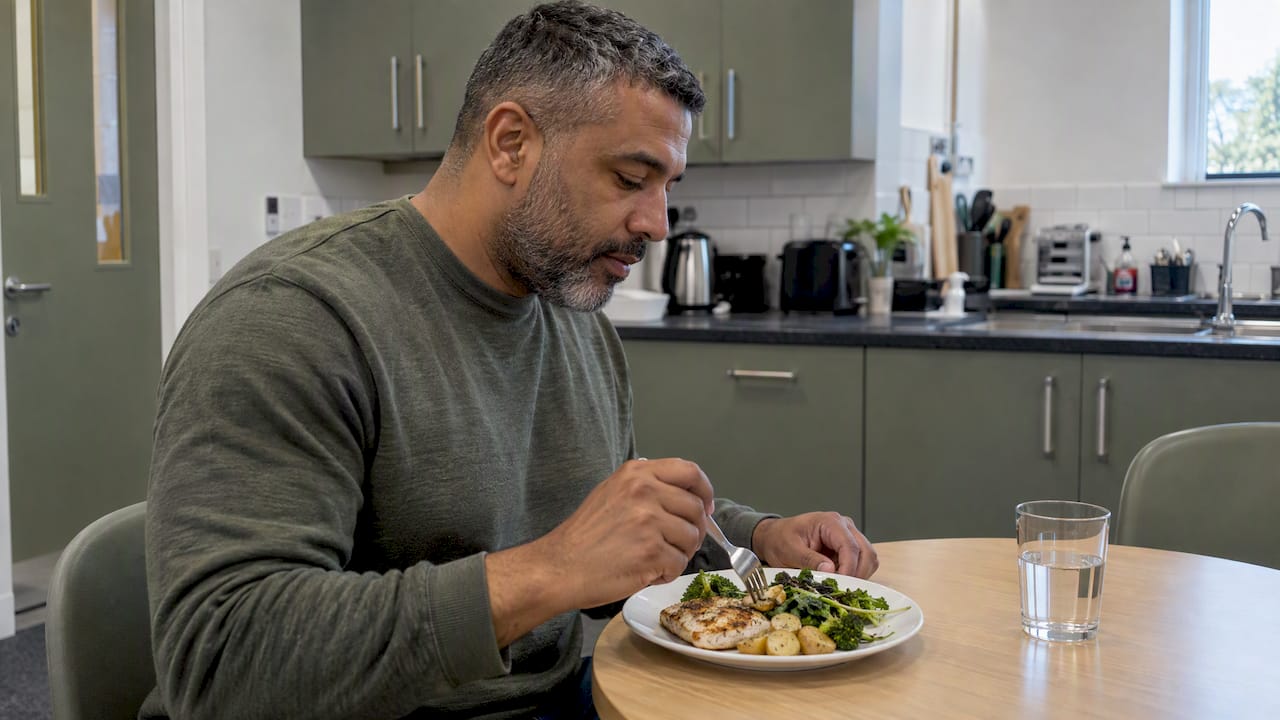
Eating less is the point. Eating too little of the right things is where problems start, including tiredness, constipation and losing muscle along with fat. The NHS leaflet above suggests patients can eat smaller, more frequent meals, include protein, use a smaller plate, build lasting habits, do strength activities and stay hydrated.
Make every meal count
When you can only manage a few bites, choose them well.
- Start with protein. Eggs, chicken, fish, Greek yoghurt, cottage cheese, lean mince, beans and lentils all work. The British Dietetic Association advises that to support muscle health during treatment you eat protein with each meal and do strength activities.
- Add veg and fibre next. They fill the plate and help keep your bowels moving.
- Leave starchy and fatty extras for last. If you are full by then, that is fine.
- Use a smaller plate. It makes a smaller portion look normal and takes the pressure off finishing everything.
- Eat slowly. Fullness can arrive suddenly. Slowing down helps you stop before you feel uncomfortable.
NHS advice for managing nausea is similar: eat smaller, more frequent meals, eat slowly and cut the fat content of meals. Rich, greasy food is often what sets nausea off. If that is your problem, our guide to GLP-1 nausea in UK men goes through what helps.
A simple day on a smaller appetite
This is an example, not a prescription. Your prescriber or a registered dietitian can tailor it to you, especially if you have diabetes or another condition.
| Time | Idea | Why it works |
|---|---|---|
| Breakfast | Two eggs with wholemeal toast, or Greek yoghurt with berries | Protein first thing, easy on the stomach |
| Mid-morning | A small pot of cottage cheese or a boiled egg | A planned snack stops grazing |
| Lunch | Grilled chicken salad with beans, in a small bowl | Protein and fibre in a small volume |
| Afternoon | A protein shake or yoghurt if you are not hungry | Gets protein in without a full meal |
| Dinner | Fish or lean meat, veg and a small portion of potatoes or rice | A normal meal on a smaller plate |
On busy working days, prepare a few of these ahead. A man on a site or on the road who skips lunch because he is not hungry will usually pay for it with a big evening snack and lower energy.
Protect your muscle
When appetite drops, protein is usually the first thing to slip. Losing some muscle along with fat can happen on any significant weight loss, and it matters for strength, metabolism and how you feel day to day. Protein at each meal and regular resistance work are your best defences. We cover this in detail in our guides on muscle loss on GLP-1 treatment and GLP-1 and exercise. You do not need a gym membership to start. Bodyweight work, resistance bands and a couple of dumbbells at home are enough to begin.
Drink enough
When you are not hungry, you often forget to drink as well. That matters. The MHRA warns that adequate hydration is critical, because stomach side effects can lead to dehydration and, in severe cases, serious complications such as kidney damage requiring hospital treatment. Keep a bottle with you, sip through the day, and drink more if you have been sick or have diarrhoea.
Constipation is another common knock-on effect of eating and drinking less. Our guide to GLP-1 constipation covers fluids, fibre and when to ask for help.
Perspective
Our view: appetite control is a window, not a finish line
When a man starts GLP-1 treatment, something that felt impossible suddenly gets easier. The constant pull towards food eases. That is a real gift, and we would never talk it down.
But we have seen the same mistake often enough to say it plainly: appetite control is the best time to build the habits, not a reason to skip them. The medicine lowers the volume on hunger. What you do with the quiet matters. Eat protein. Lift something heavy twice a week. Walk. Drink water. Notice what sets off your cravings and what actually helps.
That is why SHIFT is built the way it is. The Programme puts Grub (practical food ideas), Fit (movement you can actually keep up), Life Back (goals that matter beyond the scales) and My Timber (check-ins and progress tracking) around the treatment, not after it. Clinical assessment, prescribing and dispensing are handled by appropriately regulated partners, and we support you before, during and after, including if you started elsewhere.
Men are often told to just try harder. We would rather give you a plan that works with a smaller appetite, in plain English, with no judgement.
Matt O’Brien
What happens to hunger when your dose changes or you stop
The appetite effect is not fixed. It can shift over time, and it is worth knowing that before it happens.
A 2024 review in the International Journal of Obesity reports that semaglutide studies found lower hunger, greater fullness and less food-related desire during the first 12 to 24 weeks. Those effects eased between weeks 52 and 104, although they stayed better than at baseline. The authors suggest appetite effects are strongest during active weight loss and may soften during maintenance, possibly because the body's biological drive to lose more fat decreases.
So if the effect feels weaker months in, you are not imagining it, and it does not mean the medicine has failed. It is a cue to lean harder on your routines.
Stopping is a different situation. The BDA says food thoughts may return after you have used obesity medicines for some time or after stopping, and that weight regain after stopping is normal. That is not a personal failing. It is how the body behaves.
If you are thinking of coming off treatment, or you have already stopped:
- Speak to your prescriber first. They can advise on how to stop safely.
- Keep the food habits. Protein, regular meals and planned snacks matter more, not less.
- Keep training. Strength work helps hold on to muscle while your weight settles.
- Keep tracking. Weekly weigh-ins, a food log or regular check-ins catch drift early.
- Ask for support. You do not have to do it alone.
Other effects, and when to get medical advice
Reduced appetite is the effect you are after, but it comes with others. The MHRA lists common stomach effects including nausea, vomiting, diarrhoea and constipation, which can last several days. Nausea is the main one, and it is usually mild and improves over time. Less common serious effects include pancreatitis and gall bladder disease.
Get help in these situations:
- Severe tummy pain. This can be a sign of pancreatitis. The NHS advice is to get urgent medical help from your GP or NHS 111 if it happens.
- Vomiting or diarrhoea that will not settle, or signs of dehydration such as very dark urine, dizziness or not passing urine. Contact your prescriber or GP.
- Sweating, confusion or shakiness. In people without diabetes, low blood sugar can occur. The MHRA says patients should know the symptoms and act quickly to raise their blood sugar if needed, and report them to the prescriber.
- Eating far too little. If you are struggling to eat anything, tell your prescriber. A lower appetite should not become a risk to your health.
The MHRA also stresses that these medicines are prescription-only and must be used under medical supervision. If you want to know how that works in practice, see our guide to safe, clinician-led GLP-1 access for UK men, and our list of questions to ask your prescriber.
What about mood?
Men often ask whether a quieter appetite changes how they feel. Food is comfort and routine for many of us, so it is a fair question. In 2024 the MHRA concluded that the available data do not support a causal link between GLP-1 medicines and suicide, self-injury or depression. That said, losing a familiar coping habit can leave a gap. If you feel low, anxious or just flat, talk to your GP or prescriber. If you are in crisis, call 999 or Samaritans on 116 123.
Getting support that goes beyond the injection
GLP-1 medicine is a tool. It helps most when it sits inside a routine you can keep: food that suits a smaller appetite, movement that fits around work and family, and someone to check in with when things get hard.
That is what we built SHIFT around. Our men's weight management page explains how getting started works, including the eligibility checks and clinical verification handled by regulated partners. You can use it whether you are considering treatment, already on it, started elsewhere, or want support without medication.

If you want to think it through first, Before You Decide is a good place to begin. Read the full guide, take your time, and come back when you are ready. Explore →
FAQ
Why am I still hungry on GLP-1?
GLP-1 medicines can reduce appetite, but they do not remove every urge to eat. Cravings and habitual snacking can happen without real hunger, triggered by emotions, boredom or food cues. If you feel truly hungry all the time, or the effect has faded, tell your prescriber, who can check your dose and your routine.
Does GLP-1 only work by slowing the stomach?
No. Slower stomach emptying is part of it, and trials show it with some medicines. But a 2026 paper found that delayed emptying appears to play little direct role in how liraglutide suppresses appetite. Brain signalling appears to matter a lot.
Is it normal for appetite to come back over time?
Yes, it can. A 2024 review found that hunger and food-desire effects were strongest in the first 12 to 24 weeks and eased by one to two years, while staying better than before treatment. Keeping up protein, strength work and regular meals helps you keep your progress.
Can I eat what I like if I am not hungry?
You can, but what you eat counts more when you are eating less. Put protein first, add veg and fibre, and drink enough. Greasy or very rich meals often make nausea worse, so keep those small or occasional.
Should I worry if I am eating very little?
Tell your prescriber if you struggle to eat or drink enough, feel dizzy or weak, or have vomiting that will not stop. Eating small meals is expected, but not being able to eat or drink at all is not.
Sources
- GLP-1 receptor agonist patient leaflet, NHS (July 2025)
- Appetite Suppression by GLP-1 Receptor Agonists: Role of gastric emptying
- The Efficacy of GLP-1 Analogues on Appetite and food reward
- The Efficacy of GLP-1 Analogues on Appetite Parameters, systematic review (2023)
- GLP-1 or GIP diabetes treatment, Leeds Community Healthcare NHS Trust
- Medications for obesity, British Dietetic Association
- Drug Safety Update, MHRA (October 2024)
- GLP-1 receptor agonists: reminder of the potential side effects, MHRA
- MHRA reminds healthcare professionals to advise patients of GLP-1 side effects
- MHRA finds evidence does not support a link between GLP-1 receptor agonists and suicidal thoughts
- Changes in food preferences and ingestive behaviors after semaglutide, International Journal of Obesity (2024)
Recommended
- Stopping GLP-1 Treatment | Weight Regain & Appetite
- GLP-1 Weight Regain: What the Evidence Shows and How to Limit It
- UK GLP-1 Dosing: 4 week steps to cut side effects and protect muscle
- GLP-1 Side Effects: Nausea, Constipation and When to Get Help
Last updated .