Weight-Loss Diet for Men: A Practical UK Food Guide
A weight-loss diet for men needs to work around the food you enjoy, your routine and your individual energy needs. The 1,800 kcal menu below is an example, rather than a target for every man. Start with familiar meals and use the portion guide to think about manageable changes.
TL;DR:
- A daily deficit of 500 to 600 calories is linked to 0.5 to 1 kg of weekly loss; very low calorie plans need clinical supervision.
- Aim for 30 g of fiber daily and no more than 30 g each of saturated fat and free sugars; build meals around produce, whole grains, and protein.
- Include protein at each main meal and do regular strength work, especially when appetite suppressing weight management medicines reduce meal size and raise muscle loss risk.
- If weight loss stalls despite consistent effort, ask a clinician about underlying causes instead of cutting calories further and risking fatigue or muscle loss.
Table of Contents
- How many calories should men eat to lose weight?
- What to eat: portions, macros and Eatwell Guide rules that support weight loss
- Protein, strength work and muscle preservation
- Sample calorie-controlled meal plans for men
- Making it sustainable: tiny goals and male-friendly accountability
- Adjusting your diet for male-specific conditions affecting weight loss
- Integrating weight management medication with dietary changes
- Managing hunger and cravings during weight loss
- Recognising food noise and emotional eating
- Long-term maintenance after the initial diet
- Alcohol's role in men's weight loss
- Why a practical, no-nonsense plan works for men
- How Shift Some Timber can help you build a sustainable plan
- FAQ
- Sources
How many calories should men eat to lose weight?
Weight loss comes down to eating less energy than you burn. That sounds obvious, but the useful question is how big that gap should be and how long you can hold it without feeling wrecked.
There is no single calorie target that suits every man. Energy needs vary with body size, activity, age, health and personal circumstances. Use the example menu as a planning aid, and get individual advice from an appropriately qualified healthcare professional if you have medical needs, take medicines that affect your eating, or are considering a restrictive diet.
A practical template is a 1,800 kcal meal plan, which can offer structure without obsessive tracking.
The deficit itself matters more than the exact number you start from.
- A deficit of roughly 500 to 600 kcal a day is associated with a loss of around 0.5 to 1 kg (1 to 2 lb) per week.
- Going much lower than that for long periods usually backfires through hunger, poor energy and giving up.
- Very low calorie plans should only happen under clinical supervision, something NICE guidance is clear about for very low energy diets.
If you're on medication, have a health condition, or you're simply unsure where you should sit in that range, it's worth getting individual advice rather than guessing.
What to eat: portions, macros and Eatwell Guide rules that support weight loss
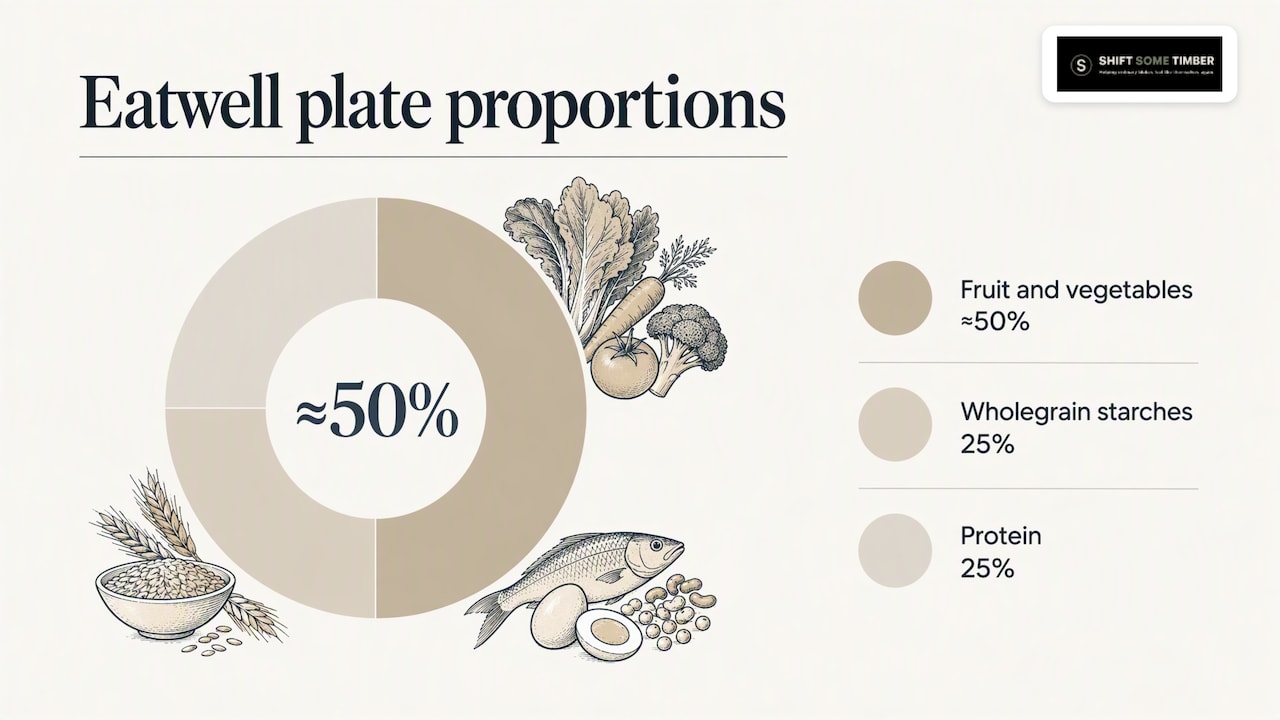
The Eatwell Guide describes the balance of food across a day or week. Fruit and vegetables, and starchy carbohydrates, each account for just over a third of what we eat overall. Include protein foods, dairy or alternatives, and small amounts of unsaturated oils. You do not need to reproduce those proportions in every meal. See the NHS explanation of the Eatwell Guide.
Men following government dietary guidance should aim for no more than 30g of saturated fat and 30g of free sugars a day, alongside at least 30g of fibre. That fibre target matters more than people expect: it's what keeps you full on fewer calories, slows digestion and supports gut health.
Five portions of fruit and vegetables a day isn't a slogan, it's the baseline the Eatwell Guide is built around, and it's one of the easiest ways to add volume to meals without piling on calories.
A few swaps make a real difference without turning meals into a chore:
- Swap sugary drinks and juice for water, sparkling water or black coffee.
- Choose wholegrain bread, pasta and rice over refined versions.
- Pick leaner cuts of meat and trim visible fat before cooking.
- Use a smaller plate, which naturally reduces portions without constant calorie counting.
- Add a side of vegetables to bulk out meals that would otherwise be carb-heavy.
None of this demands perfection. Getting most meals roughly right, most of the time, beats a strict plan you abandon after a fortnight.
Protein, strength work and muscle preservation
Protein does two jobs when you're cutting calories: it keeps you fuller for longer, and it helps protect muscle while you lose fat. That second point matters more than most men realise, especially on a calorie deficit where the body will happily burn muscle alongside fat if you let it.
Practical targets look like this:
- A palm-sized portion of meat, fish, eggs, tofu or pulses at each main meal.
- A high-protein snack such as Greek yoghurt, cottage cheese or a handful of nuts between meals.
- A protein-rich breakfast (eggs, yoghurt, or a protein shake) to curb mid-morning hunger.
Regular muscle-strengthening activity alongside your diet helps preserve lean mass, something UK Chief Medical Officers' guidance recommends for all adults, and something that matters even more for men using weight management medication, where muscle-strengthening exercise plays a part in protecting muscle mass during treatment.
Pro Tip: Spread your protein across the day rather than loading it all into one meal: your body uses it more effectively that way.
If you want more detail on protein portions or how to train sensibly while losing weight, our articles on protein for men losing weight and preventing muscle loss on GLP-1 go further into both.
Sample calorie-controlled meal plans for men
A plan you can actually follow beats a perfect one you can't. Here's a straightforward 1,800 kcal meal-plan template, adapted from UK guidance, that you can copy or adjust.
- Breakfast: porridge made with semi-skimmed milk, topped with berries and a tablespoon of seeds.
- Mid-morning snack: a piece of fruit and a small handful of unsalted nuts.
- Lunch: grilled chicken or chickpea salad with wholegrain bread and olive oil dressing.
- Afternoon snack: low-fat Greek yoghurt with a drizzle of honey.
- Dinner: baked salmon or tofu with brown rice and a generous portion of roasted vegetables.
Food and energy needs vary with health, body size, activity and personal circumstances. Treat this menu as an example rather than a prescription, and discuss significant dietary restrictions with an appropriately qualified healthcare professional.
A few swaps keep the plan flexible through the week:
- Batch-cook grains and proteins on a Sunday so weekday meals take minutes, not hours.
- Grill, bake or steam rather than frying to cut unnecessary fat calories.
- Keep a stocked fridge of quick proteins (eggs, tinned fish, yoghurt) for days when cooking isn't happening.
- Replace one takeaway a week with a home-made version of the same dish.
The goal isn't rigid adherence to any single day's menu. It's having two or three templates you can rotate so you're never stuck deciding what to eat when you're hungry and short on time.
Making it sustainable: tiny goals and male-friendly accountability
Diets fail more often from boredom and isolation than from bad food choices. Tiny, specific goals work better than vague ambitions: "take a short walk after dinner on a regular basis" beats "get fitter" every time.
- Set one or two small, measurable changes a week rather than overhauling everything at once.
- Track progress somewhere visible, whether that's a notebook, an app or a simple spreadsheet.
- Find an accountability partner, whether a mate, a partner or a workplace group.
- Use a sports club, five-a-side team or gym group as a built-in support structure.
Men respond well to humour and camaraderie when it comes to sticking with weight loss, and programmes that combine practical diet advice with activity and a bit of banter tend to land better than clinical, joyless plans.
Pro Tip: Plan your maintenance phase before you need it: decide in advance how you'll eat once you hit your target, rather than drifting back to old habits by default.
Sustainability beats speed here. A slower, steadier loss you can maintain is more sustainable than a crash diet you abandon.
Adjusting your diet for male-specific conditions affecting weight loss
Not every man loses weight at the same rate on the same plan, and some of that comes down to biology rather than willpower. Lower testosterone, which becomes more common with age and excess body fat, can make fat loss slower and muscle retention harder, creating a cycle where carrying more weight further lowers testosterone.
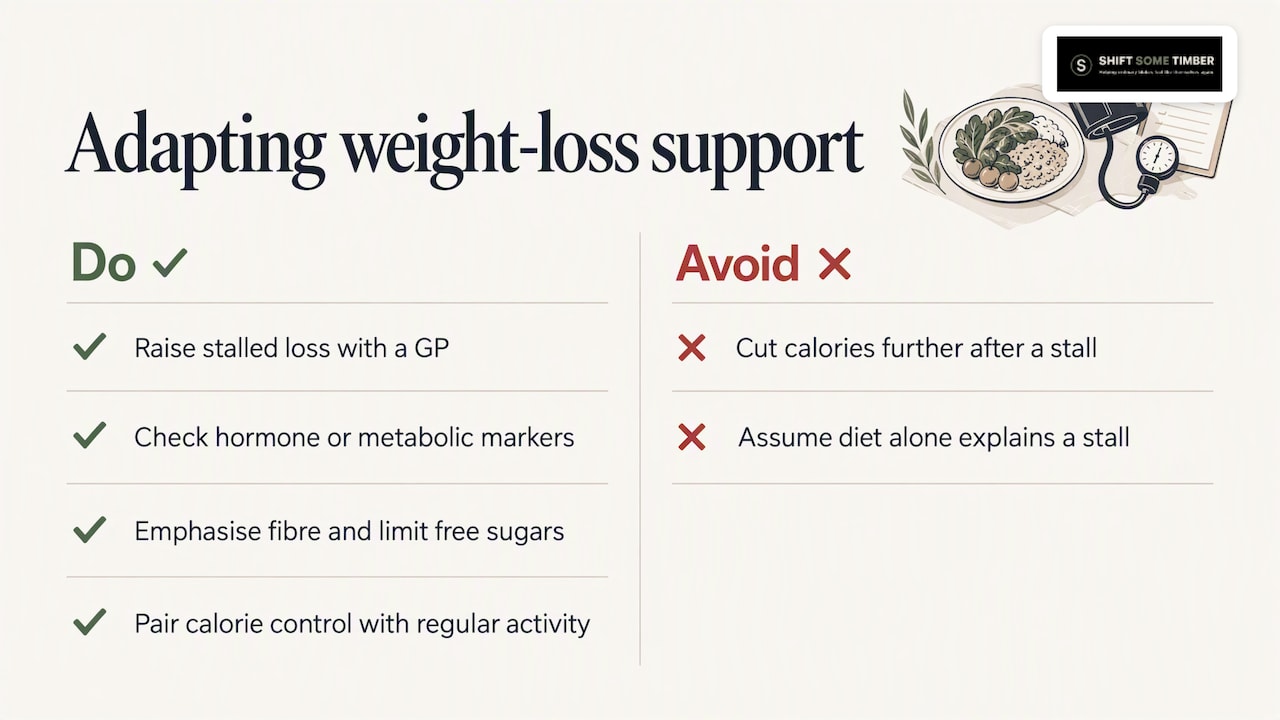
Metabolic syndrome, a cluster of raised blood pressure, high blood sugar and excess abdominal fat, is another factor that changes how a standard calorie-controlled diet performs. Men dealing with this often see better results from a diet that leans harder into fibre, limits free sugars tightly, and pairs calorie control with regular activity rather than diet alone, consistent with the emphasis NICE guidance places on individualised, flexible dietary interventions.
This isn't a reason to abandon the basics covered already. The Eatwell structure, a sensible deficit and adequate protein still apply. What changes is the pace of expectations and, in some cases, the need for a clinician to check hormone levels or metabolic markers before assuming diet alone explains a stalled result.
If weight loss has stalled despite consistent effort, that's a sign worth raising with a GP or a structured programme rather than simply cutting calories further, which risks muscle loss and fatigue without addressing the underlying issue.
Integrating weight management medication with dietary changes
GLP-1 medicines and other weight management treatments work alongside diet, not instead of it. These medicines typically reduce appetite, which makes it easier to eat less, but the food choices underneath still matter for health and for protecting muscle mass.
Protein becomes more important on medication, not less, because appetite suppression can mean smaller meals overall, and skipping protein in favour of whatever feels manageable risks losing muscle alongside fat. Spacing smaller, protein-forward meals through the day may work better than trying to force down large meals when your appetite has genuinely changed.
Muscle-strengthening activity matters here too. For people taking GLP-1 receptor agonists, maintaining muscle mass through resistance work helps protect strength and metabolic health during treatment, a point our GLP-1 and exercise guidance covers in more detail.
Medication should sit inside a managed pathway rather than being self-directed. Dietary changes, dose adjustments and monitoring are best handled with clinical oversight, which is part of why treatment and food guidance tend to work better combined than split across separate, disconnected sources.
Managing hunger and cravings during weight loss
Hunger on a calorie-controlled diet is manageable, but it needs a plan rather than willpower alone. Protein and fibre are the two biggest levers: both slow digestion and extend fullness far more effectively than cutting fat or carbs in isolation.
Practical tactics that help:
- Eat protein and vegetables first at each meal, before carbohydrates.
- Keep a stash of ready snacks (nuts, yoghurt, fruit) so hunger doesn't turn into grabbing whatever's nearest.
- Drink water before assuming a craving is genuine hunger, since thirst is often mistaken for it.
- Avoid skipping meals, which tends to trigger overeating later in the day.
Cravings specifically, as opposed to general hunger, often follow patterns: stress, boredom, tiredness or simply habit (a biscuit with every cup of tea). Noticing the trigger matters more than fighting the craving itself. A short walk, a glass of water or a five-minute delay often breaks the urge without any willpower contest.
Sleep plays a bigger role here than most men expect. Poor sleep increases hunger hormones and makes cravings harder to resist the next day, so treating sleep as part of the diet, not separate from it, pays off.
Recognising food noise and emotional eating
Food noise, the constant background chatter about what to eat next, when the next meal is, or what's in the fridge, is something a lot of men experience without having a name for it. It's not weakness. It's a mix of habit, hunger signalling and, for some men, genuine difficulty switching off thoughts about food.
Emotional eating is closely linked: eating in response to stress, frustration or low mood rather than physical hunger. It's common, rarely discussed among men, and often dismissed as "just being peckish" rather than recognised for what it is.
A few things help separate emotional eating from genuine hunger:
- Ask whether you'd eat a plain piece of fruit right now; if the answer is no, it's probably not physical hunger.
- Notice the time pattern: emotional eating often strikes at the same time or situation repeatedly (after work, during a stressful call, late at night).
- Find a non-food response to the trigger, whether that's a short walk, calling a mate or simply naming the feeling out loud.
None of this requires perfect self-awareness overnight. Simply noticing the pattern reduces its grip, and talking about it with someone, rather than carrying it alone, tends to help more than most men expect.
Long-term maintenance after the initial diet
Losing weight and keeping it off are different skills, and the second one gets far less attention than it deserves. Maintenance calories sit higher than your deficit calories, often close to where you started minus a modest margin, and shifting into that phase deliberately matters more than drifting into it.
The Eatwell structure doesn't change once you've hit your target. What changes is the volume: slightly larger portions, perhaps reintroducing a food group you'd restricted, and a shift from weight loss tracking to simply maintaining the habits that got you there.
Weighing in less frequently, but not stopping entirely, helps catch small regains before they become large ones. A sensible approach is checking in every couple of weeks rather than daily, which reduces the obsessive tracking that makes maintenance feel like punishment.
Keeping some of the structure, a rough meal template, regular activity, a protein-forward approach, gives you something to fall back on during busy or stressful periods rather than needing to rebuild habits from nothing every time life gets in the way.
Alcohol's role in men's weight loss
Alcohol is one of the easiest places to cut calories without changing a single meal. A pint of beer, a large glass of wine or a couple of spirits with mixers can add up to several hundred extra calories in an evening, on top of often triggering less healthy food choices alongside it.
Moderating rather than eliminating tends to work better long term. Choosing lower-calorie drinks, alternating alcoholic drinks with water, and setting a limit before a night out rather than deciding in the moment all help keep intake in check without turning a social evening into a battle of willpower.
Alcohol can also affect sleep quality, which may contribute to hunger and cravings later. Cutting back isn't just about the calories in the glass, it's about possible knock-on effects on appetite and decision-making.
Why a practical, no-nonsense plan works for men
We've found that men tend to respond better to practical, buddy-style support than to strict rules handed down from above. Small, specific steps beat sweeping overhauls, and checking in regularly beats disappearing for months and hoping for the best.
Extreme diets rarely stick. What tends to work is a plan you can actually live with, built around food you'd choose to eat anyway, with someone checking in to keep you honest.
— Matt O’Brien
How Shift Some Timber can help you build a sustainable plan
If you want more than a calorie target and a meal plan, we built our Programme around the bits that usually get left out: practical food ideas through Grub, achievable movement through Fit, meaningful personal goals through Life Back, and regular check-ins through My Timber to keep progress visible.
SHIFT provides general information and free practical support through My Timber, Grub, Fit and Life Back. These resources do not replace a clinical assessment or medicine review. Prescribing, dispensing, dose changes and clinical monitoring remain the responsibility of your appropriately regulated healthcare provider. SHIFT medicine ordering remains closed while its regulated treatment partner is not commissioned.
- Men wanting ongoing support rather than a one-off plan.
- Men considering or already using weight management medication who want food and movement guidance that fits around it.
- Men who started elsewhere, stopped treatment, or simply want support without medication at all.
If any of that sounds like where you are, our men's weight management programme is the place to start, and our knowledge hub has further practical reading if you'd rather explore first.
This article is general information, not a substitute for advice from a qualified doctor. Consult a qualified healthcare professional about your own circumstances before acting on anything here.
FAQ
Which diet is best for weight loss for males?
There's no single best diet for every man, but a calorie-controlled approach built around the Eatwell Guide, with higher protein and regular activity, is consistently the most sustainable option. Fad diets that cut entire food groups tend to work short term but are harder to maintain.
What is the fastest way for a male to lose weight?
The safest sustainable rate is around 0.5 to 1 kg (1 to 2 lb) a week, achieved through a moderate calorie deficit rather than extreme restriction. Faster loss usually means muscle loss and a higher chance of regaining the weight afterwards.
What is the 30-30-30 rule for men?
The 30-30-30 rule is an informal approach that pairs a protein-focused start to the day with low-intensity exercise. It isn't an official NHS or government guideline, so treat it as one possible habit to try rather than a proven requirement.
What foods burn belly fat in men?
No single food targets belly fat specifically, since fat loss happens across the whole body through a sustained calorie deficit. Foods high in protein and fibre, such as lean meat, pulses, vegetables and wholegrains, support fullness and muscle retention while you lose weight overall.
Sources
Recommended
- Protein for Men Losing Weight: Practical Food, Not Gym Theatre
- Weight Loss for Men UK: Getting Started & Support
- Weight Loss for Men Over 40: A Realistic UK Guide
- Why Is It Harder for Men to Lose Weight After 40?
Related: The Practical Men's Nutrition Guide.
Last updated .