
Sleep Routine for UK Shift Workers: Nights, Earlies and Days Off
A good sleep routine for shift work is built around your rota, not the clock. Aim for roughly 7 to 8 hours in every 24, bank sleep before a run of nights, keep your bedroom dark, cool and quiet, and use cues such as "lights down, phone away" to start winding down. Most adults need 7 to 8 hours' sleep a day, according to the HSE, but daytime sleep is usually lighter and shorter, so shift workers have to work harder for it.
We are the SHIFT Team, and this guide is general information, not medical advice. Our free practical support, My Timber, is there alongside whatever else you are doing, and our shift work and unrefreshing sleep guide goes deeper on the problem.
TL;DR
- Aim for 7 to 8 hours in 24, as one block or a main sleep plus a short nap.
- Before a first night, sleep in and take an afternoon nap. After a last night, nap for 1 to 2 hours before midday, then aim for a near-normal bedtime.
- Make the bedroom dark, cool (around 16 to 20°C) and quiet, and stop caffeine several hours before sleep.
- Keep a two-week sleep diary so you can see what works for your pattern.
- If sleep problems happen more than three times a week for several weeks, or you feel dangerously tired, see your GP.
Table of Contents
- Why shift work makes sleep harder
- Example 1: a run of night shifts
- Example 2: early starts
- Build your wind-down cues
- Set up the bedroom for daytime sleep
- Keep a two-week sleep diary
- Food, weight and energy on shifts
- Changing patterns and days off
- Travelling home tired
- When to see your GP
- Where SHIFT fits
- FAQ
- Sources
Why shift work makes sleep harder
Your body clock runs on light and dark. The HSE's shift work guidance (HSG256) explains that the body clock never fully adjusts, even for permanent night workers, and that day sleep is lighter, shorter and less restorative. Warmth and daytime noise disturb it more too.
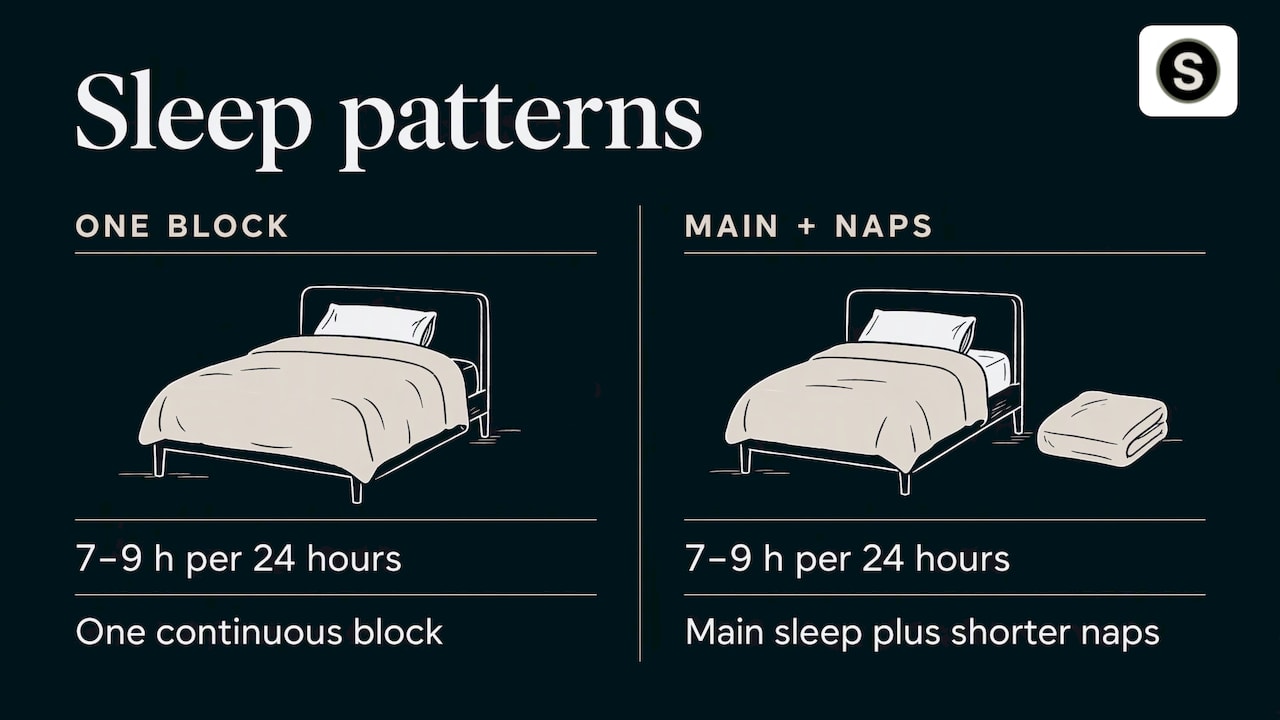
This is not a willpower problem. It is biology meeting a rota. A 2023 expert consensus study found 84% of 68 experts agreed shift workers need their own tailored sleep guidance, and it suggested 7 to 9 hours per 24, taken as one block or a main sleep plus shorter naps.
The evidence for any single trick is mixed. A BMJ review of night-shift sleep concludes that the best approach is personal: build your own combination and fine-tune it. That is why the diary below matters.
Example 1: a run of night shifts
Take Dan, a warehouse worker (an example, not a real person) on four 7pm to 7am nights.
Before the first night
- Sleep in on the morning of the first shift. Newcastle upon Tyne Hospitals' night-shift tips suggest a long lie-in and a two-hour afternoon nap.
- Eat a proper meal before you leave.
During the shift
- Keep your work area well lit.
- If you can nap on a break, keep it short. The HSE notes around 20 minutes helps, while longer naps can leave you groggy for up to 15 minutes.
- Use caffeine sparingly. The Newcastle tips say to stop at least 4 hours before the end of shift, because it can disrupt daytime sleep.
- Expect a dip between 3 and 5am. The BMJ article reports alertness and mood are lowest then, so double-check anything important.
After the shift
- Wear sunglasses on the way home, as the BMA suggests, and go to bed quickly.
- Have a light snack about 30 minutes before sleep rather than a heavy meal.
- Go to bed, not the sofa. The RCN notes daytime sleep is lighter and you will not get deep sleep napping on the sofa.
After the last night
- Take a 1 to 2 hour nap before midday, do normal afternoon things, and aim for a near-normal bedtime. The BMA says to expect two normal nights to reset your pattern.
Example 2: early starts
Take Sam, a delivery driver (again, an example) starting at 5am Monday to Friday.
The early shift squeezes the front of your night. Many people try to get to sleep at 9pm, lie awake, and lose hours. A better approach:
- Work backwards from your alarm. If you need 7 hours and wake at 4am, bed is 9pm at the latest, so start winding down at 8pm.
- Eat your main meal at least 2 hours before bed, as the BMA advises.
- Keep roughly the same wake time on days off where you can. A big weekend lie-in makes Sunday night harder.
- If you cannot sleep, get up and do something relaxing instead of lying there watching the clock.
- Use daylight when you are awake. The BMA advises getting natural light and regular exercise, though not too close to bed.
If you are short on sleep, a nap of 15 to 20 minutes can lift alertness. The 2023 consensus suggests a longer 90-minute nap can help pay back sleep debt, but avoid long naps in the 4 to 6 hours before main sleep.
Build your wind-down cues
Because your bedtime moves, The Sleep Charity suggests taking cues from your environment rather than the clock. Pick three that you repeat every time, whatever time "bed" is:
- Phone on charge across the room, with the ringer off or Do Not Disturb on. The BMA suggests limiting screens 30 to 60 minutes before bed.
- A warm shower, then curtains shut.
- Something dull and calming: a podcast you know well, a few pages of a book, stretching.
Tell your household your sleep hours. The HSE suggests asking family and neighbours to keep noise down and blocking out daytime interruptions.
Set up the bedroom for daytime sleep
| Problem | What to do |
|---|---|
| Light | Blackout curtains or blinds, or a good eye mask |
| Noise | Ear plugs, white noise or a fan |
| Heat | Keep it cool: the consensus guidance says 16 to 20°C, the BMA says 18 to 20°C |
| Interruptions | Phone silenced, doorbell notes, parcels redirected |
Avoid alcohol as a sleep aid. The HSE says it lowers sleep quality, and that relying on stimulants or sedatives builds tolerance. Our guide on caffeine, alcohol and sleep covers what is worth changing first.
Keep a two-week sleep diary
This is the one practical step we would start with. It takes two minutes a day and needs no app. Note:
- Shift start and finish
- Time you got into bed and time you woke
- Roughly how long it took to fall asleep and how often you woke
- Naps, caffeine (and when your last one was), alcohol
- How alert you felt on a 1 to 5 scale during the shift
After two weeks, look for patterns. Do you sleep better after a nap before nights? Does coffee at 4am wreck your day sleep? Change one thing at a time. No guidance fits everyone, so your diary is your evidence.
Food, weight and energy on shifts
Irregular hours make food harder to plan too. Regular meals help, and a light snack before sleep beats a heavy, fatty or spicy meal, according to the HSE. If your rota is pushing your weight the wrong way, our night shift eating plan and sleep and weight article show how the two connect.
Changing patterns and days off
The HSE's good practice advice includes two nights' full sleep when switching between days and nights, and an 11-hour minimum rest between shifts under the Working Time Regulations. If your rota regularly breaks those, raise it with your manager or union rep. Night workers also have a right to free health assessments.
Travelling home tired
This matters most. The BMJ consultation by Dr Farquhar says that after 16 to 18 hours awake, reaction times are likely similar to being at the drink-drive limit. If you are too tired to drive, do not drive. Use public transport, ask for a lift, or ask your employer about a rest area. Read our guide on daytime sleepiness, driving and safety at work for more.
When to see your GP
See your GP first if sleep problems happen more than three times a week for several weeks, according to the 2023 consensus guidance. Also go if you are nodding off at work or behind the wheel, or if tiredness, low mood or poor concentration are not lifting. The Parliamentary POST briefing reports shift work sleep disorder affects 10 to 30% of shift workers, so you are not alone. Take your sleep diary with you. If you take weight-loss or any other medication, your own prescriber handles individual treatment decisions.
Where SHIFT fits
My Timber is our free practical support: check-ins, progress tracking, SHIFT Grub food ideas, SHIFT Fit walking and strength, Life Back and Ask Timber for non-clinical support. You can use it alongside your own clinic or prescriber, after treatment ends, or without treatment, and nothing needs buying or transferring. Start at weight loss support for men and the sleep and energy information in SHIFT Health.
FAQ
How many hours of sleep do night shift workers need?
Most adults need 7 to 8 hours a day, according to the HSE, and it may decrease with age. Day sleep is lighter, so you may need to protect it more, using naps to top up.
How long should a nap on shift be?
Around 15 to 20 minutes. The HSE says longer naps can leave you unrefreshed, with up to 15 minutes of impaired alertness afterwards. Set an alarm and give yourself a few minutes to wake up fully.
How long does it take to recover after nights?
The BMA says to expect about two normal nights to re-establish your usual pattern after a final night shift. A 1 to 2 hour nap before midday can help bridge the gap.
When is tiredness a medical problem?
If poor sleep happens more than three times a week for several weeks, or you struggle to stay awake at work or when driving, speak to your GP or an occupational health service.
Sources
- Hints and tips for shift-workers, HSE
- Managing shift work, HSG256, HSE
- Good practice guidelines, HSE
- Healthy sleep practices for shift workers: consensus guidelines (2023)
- Optimising sleep for night shifts, BMJ (2018)
- BMA fatigue and sleep deprivation guidance (2019)
- Working the night shift, Newcastle upon Tyne Hospitals NHS Foundation Trust (2023)
- Shift work and your wellbeing, RCN Magazine (2025)
- Shift work, The Sleep Charity
- Fifteen-minute consultation, Farquhar (2016)
- Shift Work, Sleep and Health, UK Parliament POST
Recommended
- Night shift weight loss: an eating plan that fits the rota
- Shift work, late nights and unrefreshing sleep
- Struggling to sleep: a practical routine and when to get help
- Daytime sleepiness, driving and safety at work
SHIFT provides general UK health information and practical support. Speak to your GP or your own prescriber about symptoms, test results or medicines. My Timber is free to use alongside your own clinic, after treatment ends or without treatment.
Last updated .