Winter blues or SAD? Low mood when the clocks go back
If you are struggling right now: you do not have to wait until things get worse. Samaritans are there day or night. Call free on 116 123. If your life is at risk or you feel you might act on thoughts of harming yourself, call 999 or go to A&E now. If you need help urgently but it is not an emergency, contact NHS 111 online or by phone.
Short answer: feeling flatter in winter is common, but low mood that returns each winter and gets in the way of daily life may be seasonal affective disorder (SAD). If it is affecting your work, sleep, relationships or how you feel about yourself, it is worth talking to a GP. This applies to men of any age.
What the NHS says SAD is
The NHS describes SAD as a type of depression that usually happens in the winter and goes away in the summer. Some people notice symptoms in summer instead, but that is less common.
The exact cause is not known. The NHS explains that it is thought to be linked to reduced daylight in winter, which may affect the brain chemicals involved in mood and sleep patterns.
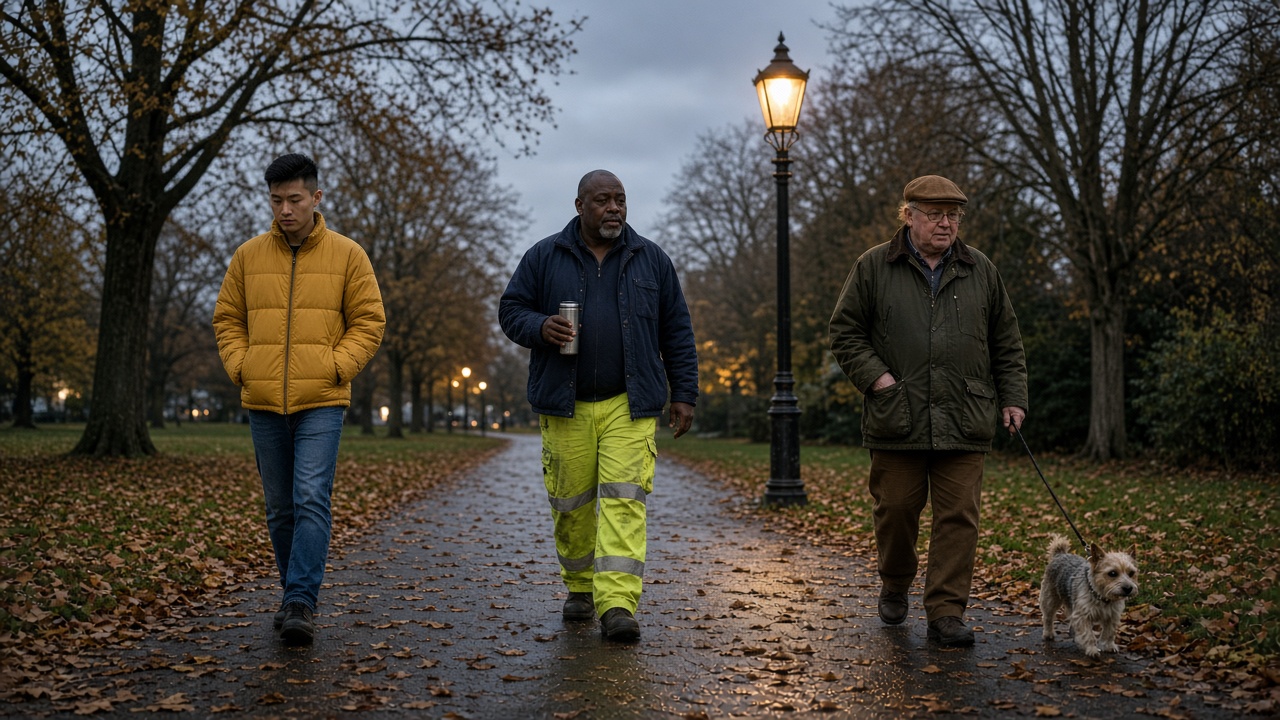
When the clocks go back on Sunday 25 October, it gets dark earlier. For many men that means leaving work in the dark and spending more of the week indoors. It is a good moment to check in with yourself.
Winter blues or something more?
With SAD, depression symptoms follow the seasons. The NHS lists symptoms including:
- low mood
- a lack of interest in things you usually enjoy
- feeling guilty, hopeless or worthless
- feeling restless or irritable
- difficulty concentrating
- being more hungry and eating more than usual
- being more tired and sleeping more than usual
- thoughts of suicide or self-harm
Men do not always describe low mood as sadness. It can show up as a short fuse, pulling away from mates, drinking more or just feeling "not right". If that sounds familiar, it still counts. Our guide to feeling low covers this in more detail.
Everyday basics
These will not replace getting checked, but they are a sensible place to start:
- spend some time outdoors in daylight when you can, such as a short walk at lunchtime
- keep moving at a level that suits your health
- keep your sleep and wake times as regular as you can
- tell someone close to you how you are feeling
Getting outside does not have to mean a long hike. If your sleep has drifted, our sleep reset is a practical next step.
Where your GP and talking therapy fit
The NHS advises seeing a GP if you think you might have SAD, or if you have been diagnosed and treatment is not helping. A GP will usually ask about your moods and how they change over time.
If you are 18 or over (16 or over in some areas), you can also self-refer to NHS Talking Therapies without seeing a GP first. The NHS lists talking therapies among the treatments for SAD, and a GP can discuss the other options with you. This article is general information. It does not diagnose or recommend any treatment.
From Matt
"'I know what to do; I just don't do it' sounds decisive, but it may hide the real problem... Perhaps you are managing pain, low mood, money pressure or a health condition. Find out what is getting in the way before deciding the answer is a louder voice in your head."
Darker evenings can be one of those things. Being harder on yourself is not the fix; finding out what is behind it is.
Source: Matt O'Brien, Shift Some Timber book draft (manuscript, 2026). Matt is sharing his own view and is not a clinician.
When to get help
- Routine: low mood, poor sleep or loss of interest that is not lifting, or that comes back every winter. Book a GP appointment or self-refer to NHS Talking Therapies.
- Not sure how urgent it is: contact NHS 111 online or by phone.
- Emergency: if your life is at risk, call 999 or go to A&E. To talk to someone at any time, call Samaritans free on 116 123.
Try the sleep reset
If winter has knocked your sleep out of rhythm, start with our sleep reset, then take what you notice to your GP.
FAQ
Is SAD a recognised condition? Yes. The NHS describes it as a type of depression that usually happens in winter.
Can men get SAD? Yes. Men may notice it as irritability, withdrawal or low energy rather than sadness.
Do I need a GP referral for talking therapy? No. If you are 18 or over (16 in some areas) you can self-refer to NHS Talking Therapies.
Sources
Last updated .