Healthy Meals on a Budget: A UK Guide for Men
You can eat well in the UK without spending more. The basics are the same as always: cook simple meals from scratch, build them around cheap fillers like beans, lentils, oats, eggs and frozen veg, plan the week before you shop, and keep a back-up plan for the nights when you would otherwise ring for a takeaway. This guide shows you how, with real figures, a worked weekly plan and food safety rules that matter when you cook in bulk.
TL;DR
- A healthy week of meals can cost roughly £29 per person, according to a dietitian-written plan from the British Heart Foundation.
- Build each plate on the Eatwell Guide: starchy carbs, at least half veg and fruit, and a quarter protein such as beans, eggs or fish.
- Cheap fibre (lentils, beans, extra veg) stretches meat, keeps you full and makes portions easier to manage.
- Plan, check the shelf-label unit price, and batch cook and chill safely.
- When a takeaway happens, a few small swaps make it a lot better.
Table of Contents
- Why "healthy" does not have to mean expensive
- What a budget plate looks like
- A week of healthy meals for about £29
- Cheap meals that actually fill you up
- Shopping smart: where the savings are
- Batch cooking without the food safety slip-ups
- When the takeaway happens anyway
- Our view: what we see men get wrong
- If you use weight-loss medication
- Want support that goes beyond a meal plan?
- FAQ
- Sources
Why "healthy" does not have to mean expensive
A lot of men assume that losing weight means buying special products: protein-labelled snacks, "diet" ready meals, powders. You do not need them. NHS advice on eating well when trying to lose weight is built on ordinary home-cooked food, not on expensive products marketed as diet food.
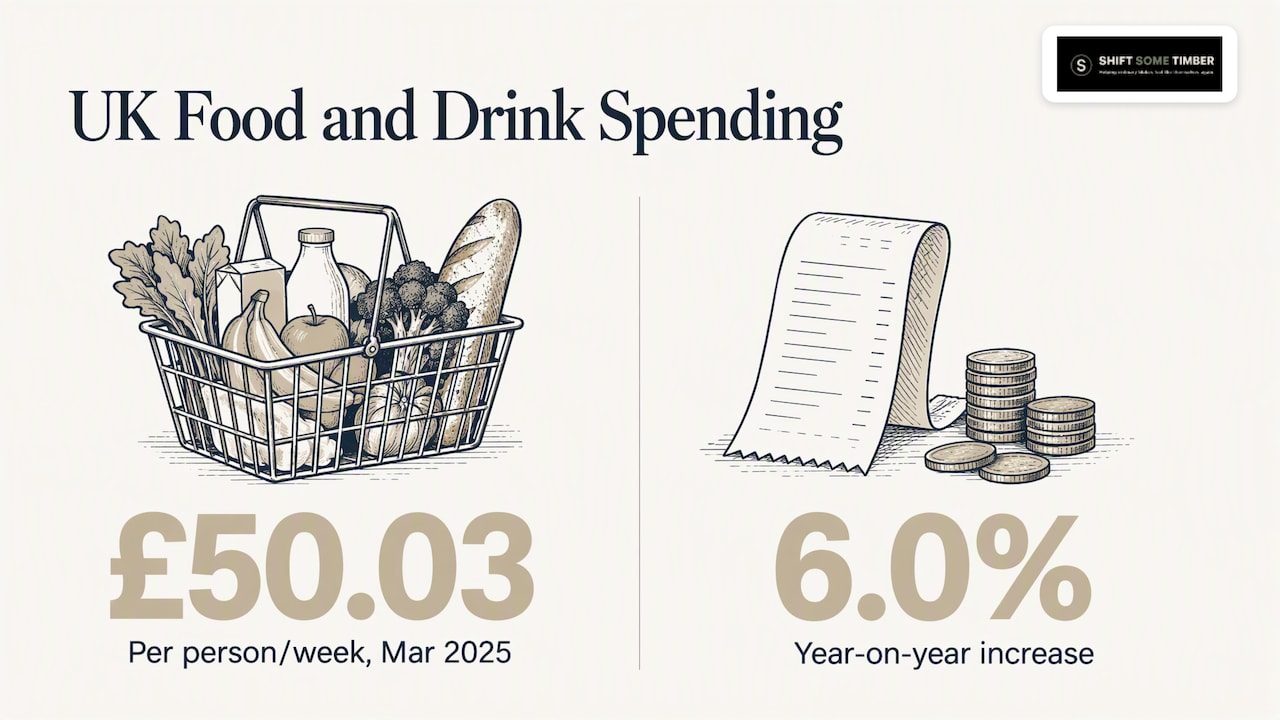
The money is also in the habit. Government figures show that the average UK household spent £50.03 per person per week on all food and drink in the year ending March 2025, including alcohol and eating out. Spending per person went up 6.0% on the year before. That figure includes the pub, the lunch deal and the Friday curry, which is exactly where a budget leaks and where waistlines grow.
So the aim is not to eat like a monk. It is to put most of your meals on a cheap, repeatable footing, so the occasional treat does not wreck the month or the scales.
What a budget plate looks like
The UK's national guide to a balanced diet is the Eatwell Guide. Used as a plate, it works like this:
- Starchy carbohydrates (potatoes with skin on, wholegrain pasta, brown rice, oats, wholemeal bread): about a quarter to a third of the plate.
- Vegetables and fruit: at least half the plate.
- Protein: about a quarter, from beans, pulses, eggs, fish or lean meat.
The budget bonus is that the cheapest foods in the shop sit in exactly these groups. Oats, rice, pasta, potatoes, carrots, cabbage, onions, tinned tomatoes, lentils, tinned beans and eggs cost far less per meal than most meat and ready meals.
One detail worth knowing: the same guidance says beans and pulses count as a maximum of one portion of your five-a-day, however much you eat. So add them for fibre and protein, but still get your veg from other sources.
A week of healthy meals for about £29
If you want a ready-made plan, the British Heart Foundation has published a 7-day budget meal plan written by its senior dietitian Tracy Parker. It costs around £29 per person, or £58 for two, based on supermarket prices at the time of writing (October 2025). Prices move, so treat the total as a guide and check your own shop. The plan meets Eatwell Guide proportions, aims for at least five portions of fruit and veg a day and over 30g of fibre.
You do not have to follow it to the letter. Use it as a template for how a full week fits together: porridge or egg-based breakfasts, soup or leftovers for lunch, and a batch-cooked dinner that does two nights.
A simple day you can copy
| Meal | Example | Why it works on a budget |
|---|---|---|
| Breakfast | Porridge made with semi-skimmed milk, a chopped banana | Oats are cheap and filling |
| Lunch | Lentil and vegetable soup with a slice of wholemeal bread | Made in bulk, costs little per portion |
| Dinner | Chicken and veg stir-fry with brown rice, or chilli with half the mince swapped for beans | Pulses stretch the meat |
| Snack | Apple, plain yoghurt or a boiled egg | No packaging premium |
If breakfast is where your day falls apart, our guide to high protein breakfasts for men shows how to hit 20 to 40g from everyday food such as eggs, yoghurt and oats.
Cheap meals that actually fill you up
Hunger is the reason diets fail. The cheap meals that work are the ones with fibre and protein, so you are not scavenging two hours later.
- Chilli with beans and extra veg. Use less mince, add kidney beans, peppers and a tin of tomatoes. Serve with rice.
- Red lentil dhal. Lentils, onion, a tin of tomatoes, spices. Very low cost per portion and freezes well.
- Jacket potato with baked beans and a side salad. Simple, and the potato skin adds fibre.
- Omelette or frittata with whatever veg is left in the fridge.
- Tuna and sweetcorn pasta bake with wholewheat pasta and a tin of tomatoes.
- Chicken thigh traybake with roots such as carrots and parsnips. Thighs are usually cheaper than breast.
- Vegetable curry with chickpeas and brown rice.
NHS renal and diabetes dietitians describe the principle behind several of these: use cheaper, fibre-rich fillers such as lentils, beans and extra vegetables to extend your meat portions, rather than cutting whole food groups. You keep the meals you like, spend less on meat and feel fuller on fewer calories.
If you want to go deeper on protein, read protein for men losing weight. It is practical food, not gym theatre.
Shopping smart: where the savings are
Plan first, then shop
The British Heart Foundation's advice on a healthy food shopping list rests on one idea: decide what you will eat before you are hungry, so you buy fewer impulse items. An NHS eat well, spend less fact sheet gives the same first tip: plan ahead, write a list and avoid shopping on an empty stomach.
If you are also trying to get a grip on money more broadly, these smart budgeting habits pair well with a weekly food budget. Setting a fixed food amount and tracking it makes the plan stick.
Check the unit price, not the offer
The big yellow "special offer" sticker is not always a bargain. The same NHS fact sheet points out that the price per unit, such as per 100g or per kg, on the shelf label is the reliable way to compare. It also notes that supermarket own-brand or value ranges can match name brands at a fraction of the price.
Use tinned and frozen
Frozen veg is cheap, keeps for months and means no wilted bag at the back of the fridge. Tinned veg is also fine: the NHS says tinned fruit and veg count towards your five-a-day, and advises choosing those in juice or water with no added sugar or salt. Tinned pulses, tomatoes, fish and sweetcorn are the backbone of many cheap healthy dinners.
A short list that covers most weeks
- Oats, rice, wholewheat pasta, potatoes
- Eggs, tinned fish, chicken thighs, lean mince
- Tinned tomatoes, chickpeas, kidney beans, lentils
- Frozen veg and frozen fruit
- Onions, carrots, cabbage, bananas, apples
- Plain yoghurt, semi-skimmed milk
Batch cooking without the food safety slip-ups
Cooking a big pot on Sunday and eating from it all week is the single easiest way to cut costs and stop impulse takeaways. It only works if you handle it safely.
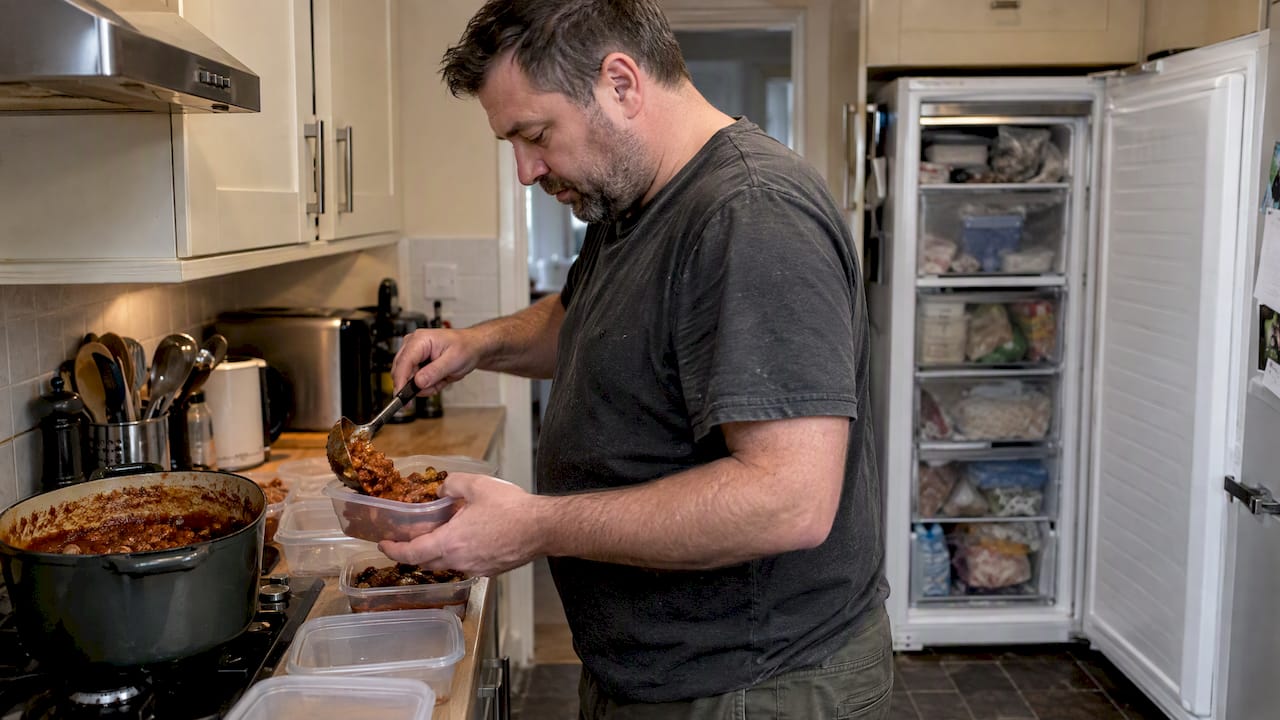
The Food Standards Agency says to chill, freeze and defrost food safely: cool leftovers quickly and get them into the fridge or freezer within one to two hours. This matters for rice and bulk-cooked stews, because some bacteria, such as Clostridium perfringens, form spores that survive cooking and grow during slow cooling or unrefrigerated storage.
Practical rules:
- Divide big pots into shallow, individual containers so they cool fast.
- Get them into the fridge or freezer within one to two hours.
- Label with the date.
- Reheat until piping hot all the way through.
- Stick to use-by dates. The FSA is blunt that eating food past its use-by date raises your risk of food poisoning, and you cannot rely on a sniff test to tell.
Individual portions help with weight too. You take one box, not "a bit more from the pot".
When the takeaway happens anyway
Every plan needs a back-up for the night you are tired, late and the cupboard looks empty. A takeaway is not failure. It just works better as a planned choice than a default.
NHS guidance on better takeaway choices suggests sensible habits:
- Decide what you will order beforehand and say no to offered extras.
- Share a pizza and add a big mixed salad, or share a curry and add extra vegetable sides.
- Do not supersize, even if it looks like a deal.
- Keep takeaways as an occasional meal and cook at home most of the time.
In practice, that means grilled chicken or a tandoori dish over a creamy sauce, a small portion of rice rather than rice and naan, and a wrap or burger without the large fries. We go through specific orders in better takeaway choices without ordering a salad, and the wider challenge of restaurants and pubs in eating out while losing weight.
The budget point is simple too: a freezer portion of your own chilli costs a fraction of a delivery order, so keep two or three in the freezer for exactly these nights.
Our view: what we see men get wrong
We started SHIFT because the usual advice felt written for someone else: someone with time, a big budget and no family to feed. Ordinary men with jobs, kids and a tight month need something more realistic.
Here is where we think it goes wrong, and what works better:
- All or nothing. Men often go from takeaways five nights a week to a perfect plan, then quit when it slips. Start with three planned dinners and build from there.
- Buying the "diet" version. You do not need it. Plain food, cooked at home, does the job.
- Skipping meals to save money or calories. It usually ends in a late-night raid on the fridge. Regular meals with protein and fibre are easier to stick to.
- Treating food as only about the scales. Energy, sleep, mood and confidence matter just as much, and they are often the first things men notice improving.
Our programme thinking, Grub for practical food, Fit for achievable movement, Life Back for personal goals and My Timber for check-ins, comes from that. Food has to fit your shopping budget and your week, or it will not last.
— Matt O’Brien
If you use weight-loss medication
Cheap, high-fibre, protein-rich meals matter even more if you are on a GLP-1 treatment, because appetite is smaller and every meal has to count. Small portions of beans, eggs, fish, yoghurt and veg help you meet your needs without spending a lot. Our guides on protein for men losing weight and protecting muscle on GLP-1 treatment explain how. If you take medication, follow the advice of your prescriber or pharmacist about what and how to eat.
Want support that goes beyond a meal plan?
Recipes only go so far if the rest of life gets in the way. SHIFT supports men before, during and after treatment, including those who started elsewhere or want help without medication. You can see how it works on our weight loss for men page, or browse free guides and printables in downloads and resources.
FAQ
How can I eat healthily on a budget in the UK?
Plan your meals, write a list and shop once a week. Base dinners on cheap staples such as oats, potatoes, rice, eggs, beans, lentils and frozen veg, and compare the unit price on the shelf label. Batch cook and freeze portions so you have a back-up for busy nights.
What is the cheapest healthy dinner I can make?
Lentil dhal with rice, a bean chilli, or a jacket potato with beans and salad are among the lowest-cost options. All three are high in fibre, filling and easy to batch cook. Add frozen veg to get more of your five-a-day.
Are frozen and tinned vegetables as good as fresh?
They are a sound choice. The NHS says tinned fruit and veg count towards your five-a-day, as long as you pick those in juice or water with no added sugar or salt. Frozen veg is just as practical and cuts waste because you use what you need.
Is a takeaway ever okay when I am trying to lose weight?
Yes, if it is occasional and chosen with care. Decide your order in advance, skip the extras, avoid supersizing, and share or add vegetable sides. Keep a home-cooked portion in the freezer so a takeaway is a choice, not a default.
Sources
- Family Food FYE 2025, GOV.UK
- 7 days of healthy meals on a budget, British Heart Foundation
- The Eatwell Guide, GOV.UK
- Healthy eating when trying to lose weight, NHS
- Eating well with diabetes, Royal Wolverhampton NHS Trust
- Healthy food shopping list, British Heart Foundation
- Eat well, spend less fact sheet, Medway Community Healthcare
- The top tinned superfoods for less than £1, Saga
- How to chill, freeze and defrost food safely, Food Standards Agency
- Clostridium perfringens, Food Standards Agency
- Student guide to food safety and hygiene, Food Standards Agency
- Takeaway choices, Cumbria, Northumberland, Tyne and Wear NHS
Recommended
- Lose Weight With a Men’s Diet: UK 1,800 Calorie Plans That Last
- Easy Air Fryer Meals for Blokes Trying to Eat Better
- Protein for Men Losing Weight: Practical Food, Not Gym Theatre
- Meal Prep for Busy Blokes
Related: The Practical Men's Nutrition Guide.
Last updated .