
High Protein Meals for Weight Loss: A Practical UK Guide
The best high protein meals for weight loss are ordinary ones: eggs, fish, chicken, lean mince, Greek yoghurt, beans and lentils, built around a palm-sized portion of protein at each meal and plenty of veg. You don't need powders, apps or a special diet. This guide gives you the numbers, the meals and a simple prep routine that fits around work and family.
TL;DR
- Aim for a palm-sized portion of protein at breakfast, lunch and dinner. It's easier to stick to than counting grams.
- Protein helps protect muscle while you lose fat, but weight loss still comes down to a calorie deficit and regular strength work.
- Choose solid food over shakes most of the time, and keep carbs and fibre in the picture.
- Cook once, eat twice: batch a protein, a carb and some veg, then mix them through the week.
- If you're on a weight loss medicine, small appetites make protein easier to miss, so plan it on purpose.
Table of Contents
- Why protein matters when you're losing weight
- How much protein do you actually need?
- What a good portion looks like
- High protein breakfasts that take minutes
- Lunches you can make or pack
- Dinners that keep you full
- Meal prep for weight loss without the Sunday marathon
- Snacks and the shake question
- What to avoid
- If you're taking a weight loss medicine
- Our view: food that fits real life
- Getting support that goes beyond the recipe
- FAQ
- Sources
Why protein matters when you're losing weight
When you eat less, your body loses fat, but it can lose some muscle too. Muscle matters for strength, for everyday energy and for keeping your metabolism ticking over. Protein, combined with resistance training, is how you give your body a reason to hold on to it.
There's a second benefit: protein tends to keep you feeling full for longer, which makes a calorie deficit less of a grind. That's why nearly every sensible weight loss plan puts a protein source at the centre of the plate.
It isn't magic, though. NICE guidance on overweight and obesity points to a reduced-calorie diet plus more physical activity, and it advises against extreme behaviours such as cutting out all carbohydrates in the long term. Protein is one part of the plan, not the whole plan.
How much protein do you actually need?
The general UK figure for adults is about 0.75g of protein per kilogram of body weight a day. Mersey Care NHS Foundation Trust puts that at around 55g a day for a 75kg (11.8 stone) man.
When you're losing weight, especially on medication, the target often goes higher. The British Dietetic Association's review of nutrition resources for people taking obesity medications points to 1.2 to 1.5g per kg of body weight as a benchmark used in clinical settings. Individual needs vary, so if you have kidney problems or another long-term condition, check with your GP or a registered dietitian before raising your protein.
Here's what that looks like in real numbers, using the 1.2 to 1.5g range:
| Your weight | Approx. daily protein (1.2 to 1.5g per kg) |
|---|---|
| 90kg (14 st 2 lb) | 108 to 135g |
| 100kg (15 st 10 lb) | 120 to 150g |
| 110kg (17 st 5 lb) | 132 to 165g |
That can look like a lot. Spread over three meals and a snack or two, it's a lot more manageable than it sounds.
The palm rule
You don't need to weigh everything. A palm-sized portion of protein at each of your three meals is a practical starting point for most men, and it's the approach we'd suggest before anyone downloads a tracking app. If your hunger is low or your portions have shrunk, add a protein snack on top.
For a deeper look at everyday food choices, see our guide to protein for men losing weight.
What a good portion looks like
These approximate figures come from an NHS protein guide for patients from Kent Community Health NHS Foundation Trust. Brands and cuts differ, so treat them as a guide.
| Food | Portion | Approx. protein |
|---|---|---|
| Chicken breast, grilled, no skin | 100g | 32g |
| Tinned tuna or sardines, drained | Small can (100g) | 25g |
| Prawns | 100g | 24g |
| Minced beef | 100g | 21g |
| Greek yoghurt | 100g | 10g |
| Cheddar | 2 slices (40g) | 10g |
| Egg | 1 large | 8g |
A cooked chicken breast, a tin of tuna or a couple of eggs with some yoghurt on the side gets you most of the way to a good meal's worth of protein without much effort.
High protein breakfasts that take minutes
Breakfast is where many men fall short: toast, a pastry or nothing until lunch. Fixing it is often the easiest win of the day.
- Scrambled or poached eggs on wholegrain toast. Three eggs gives you about 24g using the figure above. Add spinach or tomatoes.
- Greek yoghurt with berries and oats. A 200g pot of Greek yoghurt gives around 20g, going by the 10g per 100g figure. Add a handful of nuts or seeds for more.
- Omelette with leftover veg and a little cheese. Quick, filling and easy to make in the same pan you use for everything else.
- Smoked salmon and scrambled eggs. A reader favourite and a good way to get oily fish into the week.
- Beans on toast with an egg on top. Cheap, familiar and more protein than toast alone.
We've written a whole piece on this: high protein breakfasts for men, 20 to 40g from everyday food.
Lunches you can make or pack
Lunch is where convenience usually beats good intentions. Aim for something you can build in five minutes or take with you.
- Chicken and chickpea salad. Cooked chicken, tinned chickpeas, cucumber, tomato and a squeeze of lemon.
- Tuna and bean bowl. A drained tin of tuna (about 25g protein), mixed beans, red onion and olive oil.
- Quinoa and black bean bowl. Pre-cooked pouches of grains and a tin of beans make this a five-minute job. Add avocado, tomatoes and lime.
- Egg and cress wholemeal sandwich with a side of cottage cheese. Simple, filling and sold in most supermarkets.
- Leftover dinner. Honestly the best option. Make an extra portion the night before.
Dinners that keep you full
Dinner is where family meals matter. The goal is one meal everyone eats, with your portions adjusted.
- Baked salmon with new potatoes and broccoli. Oily fish counts towards the Eatwell Guide advice of at least two portions of fish a week, one of them oily.
- Chilli made with lean mince and plenty of beans. Mince gives about 21g per 100g; beans add protein and fibre. Serve with a smaller portion of rice.
- Chicken stir-fry with mixed veg and noodles. Swap half the noodles for extra veg if you want to cut calories.
- Prawn and veg curry. Prawns give around 24g per 100g and cook in minutes.
- Lentil and veg bolognese. Swap some or all of the mince for lentils, and keep the spaghetti portion modest.
- Tofu or Quorn with veg and rice. A solid option if you're cutting back on meat.
The Eatwell Guide lists beans, pulses, fish, eggs and lean meat as protein choices, and says you can balance them across the day or week rather than at every meal.
A simple plate
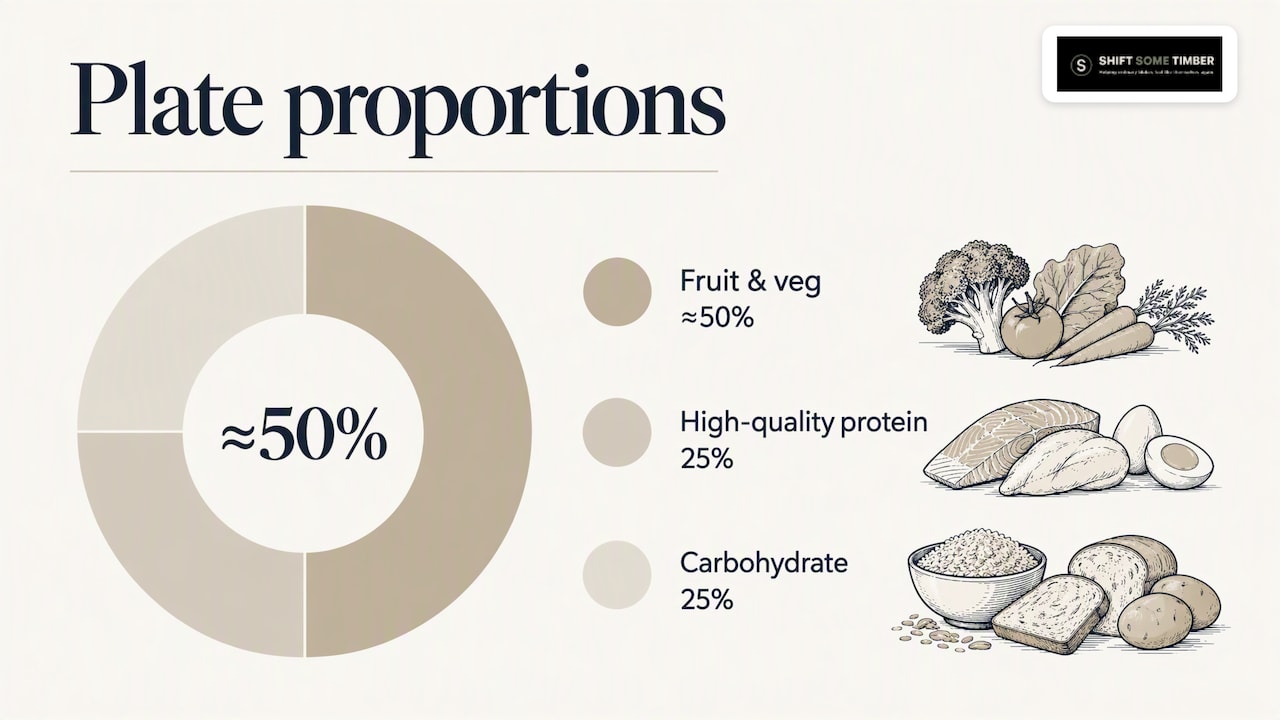
For men taking weight loss medicines, the BDA's review describes a plate of roughly half fruit and veg, a quarter high quality protein and a quarter carbohydrate. If you're not on medication, you don't have to follow this to the letter, but it's a handy picture to keep in your head at dinner.
Meal prep for weight loss without the Sunday marathon
You don't need twenty identical boxes. Batch the parts, not the meals.
- Pick two proteins. For example, a tray of chicken thighs or breasts and a pot of lentil or bean chilli.
- Cook one carb. Rice, potatoes or pasta. Keep to sensible portions.
- Prep veg two ways. Roast a tray and chop a raw salad base.
- Boil half a dozen eggs. They're a grab-and-go protein for breakfast or snacks.
- Portion it as you go. Containers in the fridge for three days, the rest in the freezer.
With that done, you can assemble bowls, wraps or plates in minutes on busy nights. Frozen veg, tinned fish and pre-cooked pouches fill any gaps.
Snacks and the shake question
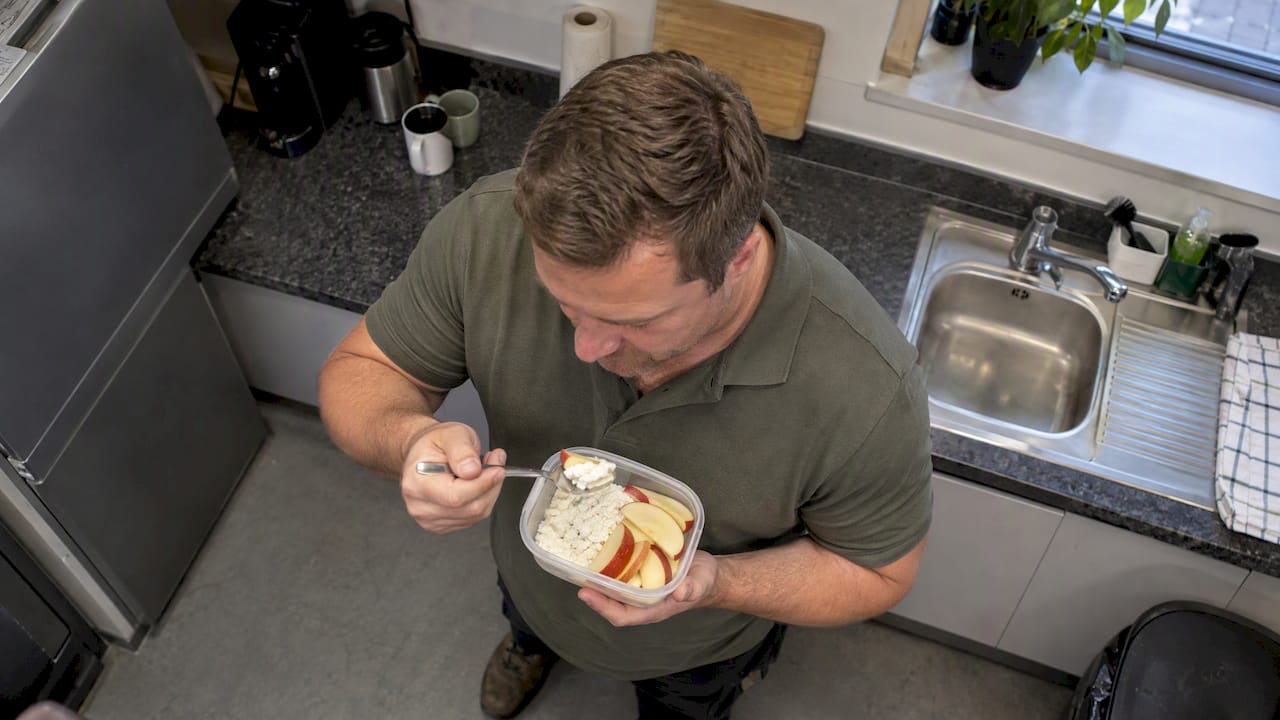
Good protein snacks include Greek yoghurt, a boiled egg, cottage cheese with fruit, a small tin of tuna on crackers, or a few slices of lean ham. They take no cooking and cover you when a meal runs late.
Shakes and bars are fine in a pinch. But drinking your calories often doesn't fill you up the way solid food does, so for most men, especially anyone managing appetite or food noise, solid protein is the better default.
What to avoid
The BDA's guidance on fad diets warns against cutting out whole food groups. Dropping carbohydrates can reduce your fibre, and that can lead to constipation. If you're on a GLP-1 medicine, constipation is already a common side effect, so keep wholegrains, fruit, veg and pulses on the plate. Our guide to GLP-1 and constipation covers what helps.
Two other traps:
- Going all in on protein and ignoring calories. Protein still has calories. You lose weight with a deficit. NICE suggests targeting about 0.5kg a week.
- Skipping strength training. Protein works best alongside resistance work at least twice a week. See our guide to GLP-1 and exercise for a safe place to start.
If you're taking a weight loss medicine
Medicines such as GLP-1s can make you feel full quickly. That's helpful, but smaller meals mean it's easy to under-eat protein. The BDA says medication should be backed by dietetic support, and its patient information notes that you should still eat and drink regularly and avoid long gaps between meals.
In practice:
- Eat the protein on your plate first, then the rest if you're still hungry.
- Choose soft, moist proteins like eggs, fish, yoghurt and slow-cooked meat if appetite is low.
- Keep small protein snacks to hand.
- Talk to your prescriber or a registered dietitian if you're struggling to eat enough.
For more, read our pieces on preventing muscle loss on GLP-1 treatment and what men can do about muscle loss.
Our view: food that fits real life
We started SHIFT because ordinary men tell us the same thing: the advice is either too clinical or too gym-bro. Nobody has time to weigh chicken at 6am between school runs and a long day at work.
So we keep it simple. Build the plate, include a protein you like, keep it affordable, and don't treat one off day as failure. That's the thinking behind Grub, the food part of our programme: practical ideas you'll actually cook. Food sits alongside achievable movement, check-ins and personal goals, because weight loss that lasts is about more than the plate.
If you've started treatment elsewhere, stopped medication or just want support without it, you're welcome too. No judgement, no lectures.
— Matt O’Brien
Getting support that goes beyond the recipe
If you want structure around your food, movement and progress, The Shift Programme brings Grub, Fit, Life Back and My Timber together. You can also read how our weight loss support for men works, or look at our information on weight management medication, with clinical assessment and prescribing handled by appropriately regulated partners. For a calorie-based approach, try our men's 1,800 calorie diet plans.
FAQ
How do I eat a high protein diet to lose weight?
Put a palm-sized portion of protein on your plate at every meal, fill half of it with veg, and add a sensible portion of carbs. Add a protein snack if you're hungry between meals. Keep an eye on calories too, as protein alone won't create a deficit.
Which dinner is best for weight loss?
There isn't one. A good dinner has a lean protein such as fish, chicken, eggs, lentils or tofu, lots of veg and a modest carb portion. Baked salmon with potatoes and greens is a simple example.
What are easy high protein meal prep ideas?
Batch-cook a protein such as chicken or a bean chilli, a carb and a tray of veg, then mix and match through the week. Boiled eggs, tinned fish and Greek yoghurt fill in the gaps. Freeze what you won't eat within three days.
Is a high protein diet safe for everyone?
Not necessarily. If you have kidney disease or another long-term condition, speak to your GP or a registered dietitian before increasing protein. Extreme high protein diets that cut out carbs also aren't recommended, as NICE advises against cutting out all carbohydrates in the long term.
Sources
- NICE: Overweight and obesity management
- Mersey Care NHS Foundation Trust: Protein, is it hype?
- BDA: Development of nutrition resources for people taking medications for obesity
- Kent Community Health NHS Foundation Trust: Protein guide for patients
- NHS: The Eatwell Guide
- BDA: Fad diets
- BDA: Medications for obesity must be backed by dietetic support
- BDA: Medications for obesity patient information
Recommended
- Lose Weight With a Men’s Diet: UK 1,800 Calorie Plans That Last
- Protein for Men Losing Weight: Practical Food, Not Gym Theatre
- High Protein Breakfasts for Men: 20 to 40g From Everyday Food
Last updated .