Low Energy in Men Over 40: Causes and What to Do
If you're a man over 40 and running on empty, the cause is usually a mix of things rather than one condition. Poor sleep, stress, drinking, extra weight and too little movement are the most common culprits. Less often, something medical such as sleep apnoea, low testosterone, anaemia or an underactive thyroid is behind it. This guide explains how to tell the difference, what a sensible set of tests looks like, and what you can change this week.
TL;DR
- Most tiredness has an everyday cause. One NHS clinical pathway puts around 75% of fatigue presentations down to life events or lifestyle, with under 3% caused by an underlying disease.
- See a GP if you've been tired for a few weeks with no clear reason, if it affects daily life, or if you have weight loss, mood changes or you've been told you snore, gasp or choke in your sleep.
- Low testosterone is only diagnosed with symptoms plus blood tests taken in the morning, usually twice. A single home test result does not settle it.
- Carrying extra weight can drive tiredness, sleep apnoea and lower testosterone at once, so weight is often the best place to start.
- If you're on a weight loss medicine and feel flat, protein, strength work and slow eating matter.
Table of Contents
- Why energy drops after 40
- The common causes, in the order we'd check them
- Is it low testosterone?
- What to do this week
- If you're on weight loss treatment and still tired
- Our view: tiredness is a signal, not a character flaw
- Where SHIFT fits in
- FAQ
- Sources
Why energy drops after 40
Nothing falls off a cliff at 40. But several slow changes tend to stack up in the same decade. Work is at its most demanding, kids or ageing parents need you, sleep gets shorter and lighter, and most men move less than they did at 25. Add a few extra stone and a couple of drinks most nights, and you have a recipe for being tired without any single thing being "wrong".
That's worth knowing, because many men go looking for a magic diagnosis. The NHS guidance on tiredness and fatigue lists the usual suspects: not enough sleep or trouble getting to sleep, an unhealthy lifestyle (diet, little exercise), stress and anxiety, and a number of medical conditions. It also says not to self-diagnose, and to see a GP if you're worried.
The NICE Clinical Knowledge Summary describes tiredness as a common, non-specific symptom in primary care, and notes there is no universal definition of it. In plain English: it's real, it's common, and it needs a bit of detective work.
The common causes, in the order we'd check them
Sleep: the quantity and the quality
Start here, because it's free. Be honest about how long you're actually asleep, not how long you're in bed. Late screens, alcohol (which fragments sleep even if it helps you nod off), a hot bedroom and worry about work all take a toll. A fixed wake-up time, including weekends, does more for most men than any supplement.
Sleep apnoea: the one men often miss
Obstructive sleep apnoea means your airway repeatedly narrows or closes during sleep. You may not know it's happening. Clues include loud snoring, waking up gasping, a dry mouth or headache in the morning, and feeling unrefreshed after what seemed like a full night.
According to NHS formulary guidance on sleep apnoea, around 5% of men have it, and significant sleep apnoea is an independent risk factor for high blood pressure, stroke and heart attack. The same guidance says clinicians use the Epworth Sleepiness Scale to gauge daytime sleepiness, and a score of 11 or higher often leads to a referral for home-based sleep monitoring.
If your partner says you stop breathing in the night, don't wait. Tell your GP. The NHS also lists being told you make gasping, snorting or choking noises when asleep as a reason to book an appointment.
Weight, food and movement
Carrying extra weight makes everything harder: climbing stairs, sleeping well, keeping your mood up. It also feeds the other causes on this list. Obesity raises the risk of sleep apnoea and, as we cover below, is frequently a reversible reason for lower testosterone.
Food matters too, but not in the way supplement adverts suggest. Big swings in blood sugar from skipped meals followed by sugary snacks leave many men flat by mid-afternoon. If that sounds familiar, this piece on preventing sugar crashes is a practical starting point. Regular meals with protein in them usually do more than any quick fix.
On movement, the UK Chief Medical Officers' guidelines say adults should aim for 150 minutes of moderate activity a week, or 75 minutes of vigorous activity, plus strength work on at least two days. They also stress that any activity is better than none. If you're starting from zero, a brisk 20-minute walk after dinner is a real start, not a token one.
Alcohol, stress and mood
Low mood and anxiety show up as exhaustion in many men, who are less likely to call it low mood. Persistent tiredness with loss of interest, poor concentration or feeling flat is a reason to talk to your GP, not to push through. Alcohol is the quiet one: it cuts sleep quality, adds calories and worsens mood the next day.
Medical causes your GP will look for
The NHS says a GP may arrange blood tests to check for things like anaemia, diabetes or an overactive thyroid. The NICE guidance says assessment should start with your story: when it began, how severe it is, how it changes, and what triggers it. Then comes an examination and targeted tests rather than a scattergun screen. A typical first set includes a full blood count, thyroid function and a blood sugar check (HbA1c).
Your GP will also look for red flags, such as unexplained weight loss, night sweats or neurological changes. If you have any of those, get seen promptly.
Is it low testosterone?
This is the question most men over 40 end up typing into a search bar, and it deserves a straight answer.
What the symptoms look like
Low testosterone (hypogonadism) can cause low libido, erectile problems (particularly the loss of spontaneous morning erections), loss of energy and fatigue. The NHS-based testosterone guideline lists these among the symptoms. The catch is that tiredness on its own is common and does not point to testosterone. It's the combination, especially the sexual symptoms, that raises the question.
How it's diagnosed
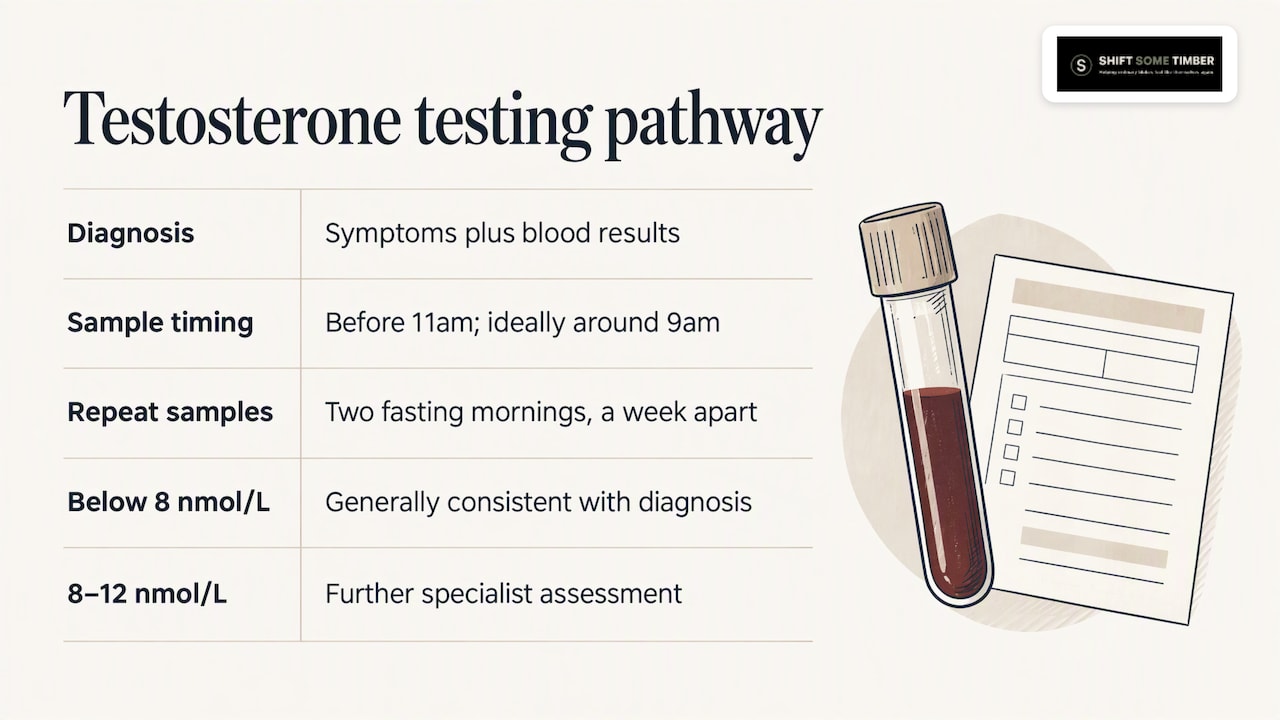
Diagnosis needs both symptoms and blood results. The same guideline says testosterone declines by roughly 1% a year after age 30 and follows a daily rhythm, so timing matters. Clinical guidance says samples should be taken before 11am, ideally around 9am, fasting, and a single low result is rarely enough. Two morning samples, at least a week apart, are generally needed.
As a rough guide from the testosterone guideline, a total testosterone below 8 nmol/L on two fasting morning samples is generally consistent with a diagnosis. Results between 8 and 12 nmol/L need further specialist assessment, including a calculation involving SHBG, to decide whether a trial of treatment makes sense. There's no single absolute cut-off, and that's why numbers on a printout without context can mislead.
What about a home testosterone test?
A home finger-prick kit can tell you something, but it's a starting point, not a verdict. Think about what the clinical guidance demands: a fasting sample taken early in the morning, repeated on a second day. A kit used at 6pm after a bad week gives you a number that clinicians would not rely on, because levels fall naturally through the day, reaching a low in the early evening. If you use one, take it first thing, note the time, and take the result to your GP rather than acting on it alone.
Weight comes first
The guideline also says obesity is frequently the main reversible cause of lower testosterone in this age group. That's encouraging. For many men, losing weight is both the treatment for tiredness and a way of bringing testosterone back up, without needing hormone treatment at all. Testosterone treatment, by contrast, is a specialist decision with its own risks and monitoring. We cover the assessment route in more detail on our testosterone and energy page.
What to do this week
Before reaching for supplements or hormones, a structured look at the basics often gets to the heart of it. Healthcare professionals consistently say sleep, alcohol, diet and stress are the most frequent contributors to men running on empty. Try this for two weeks:
- Fix your wake-up time. Same time daily, including weekends.
- Cap the booze. Keep several alcohol-free days and avoid drinking close to bedtime.
- Eat regularly. Three meals with protein, and fewer grazing snacks.
- Walk daily. Start with 20 minutes, then build towards the 150-minute weekly target.
- Add two short strength sessions. Squats, press-ups and rows at home count.
- Keep a simple log. Note sleep hours, mood, energy and any snoring reports.
If two weeks of this changes nothing, or you already have red flags, take your log to the GP. It makes the appointment far more productive.
What to ask for at the GP
You can say something like: "I've been tired for X weeks, it affects my work, and here's my sleep and activity log." Ask whether blood tests for anaemia, thyroid function and diabetes are appropriate, whether a sleep apnoea screen makes sense, and, if you have sexual symptoms, whether testosterone testing is worth doing. Mention your weight and your alcohol intake plainly. GPs have heard it all.
If you're on weight loss treatment and still tired
Some men start a GLP-1 medicine, watch the scales drop and still feel rubbish. There are usually practical reasons.
- Muscle loss. Weight loss can take muscle as well as fat. NHS patient information on tirzepatide says activity helps keep your muscle strength, which matters for healthy ageing and managing weight. Strength work and enough protein are the answer. Our guide on muscle loss on GLP-1 treatment goes through what men can do.
- Eating past fullness. The same leaflet explains that eating more than you need can make nausea and general unwellness worse. Smaller portions and spacing food out help. See our piece on GLP-1 nausea.
- Eating too little. A very low intake can leave you flat. If food noise has gone quiet, you still need regular, protein-rich meals.
- Constipation and dehydration. Both are common and sap energy. We cover them in our GLP-1 constipation guide.
If your dose has recently gone up and you feel worse, speak to whoever prescribes it before changing anything yourself. And if you're looking at treatment for the first time, our questions for your prescriber will help you go in prepared.
Our view: tiredness is a signal, not a character flaw
We built SHIFT on lived experience, and one thing we hear again and again is that men put up with feeling shattered for years. They assume it's just age, or that they should be tougher. Then they chase one explanation, often testosterone, because a single cause feels easier to deal with than six small ones.
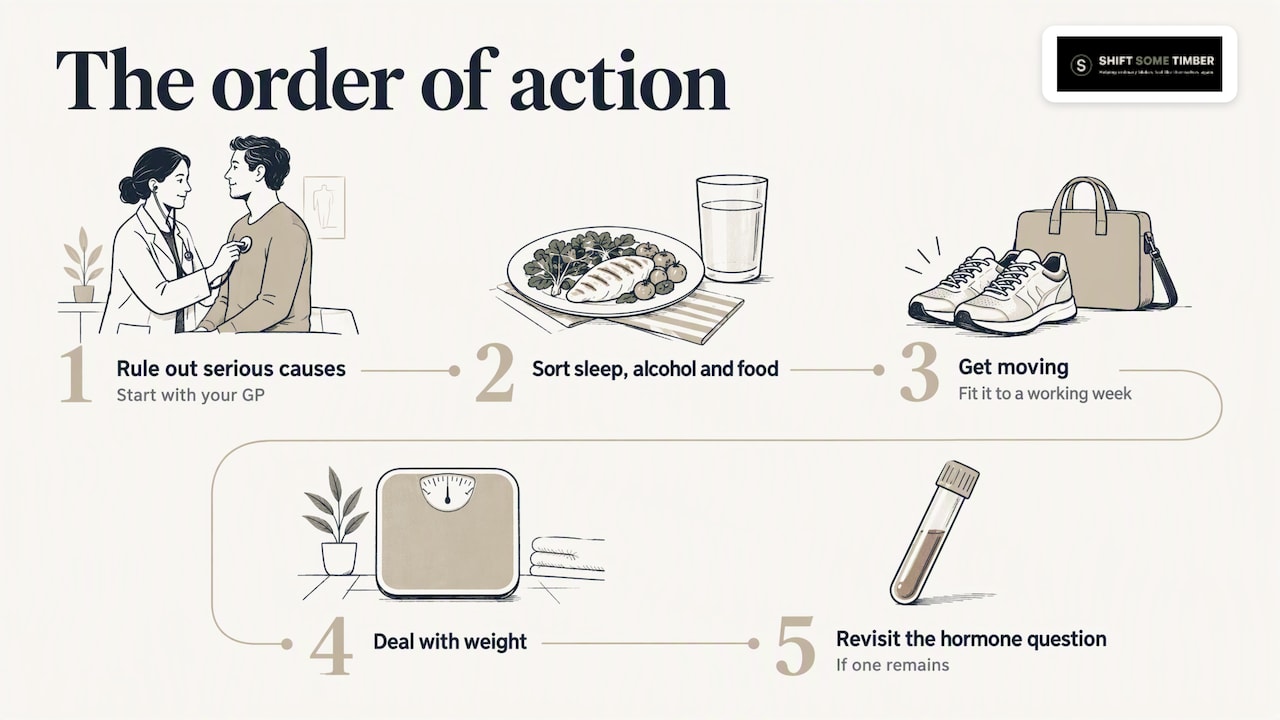
Our honest view is that the order matters. Rule out the serious stuff with your GP. Sort sleep, alcohol and food. Get moving in a way that fits a working week. Deal with weight, because it touches almost everything else on this page. Only then ask whether a hormone question is left over. Plenty of men find the question has largely answered itself by then.
We also think energy deserves a better yardstick than the scales. Walking up stairs without thinking about it, playing with the kids after work, waking up before the alarm: these are the signs that things are working, and they're the reason most men tell us they want to lose weight in the first place.
— Matt O’Brien
Where SHIFT fits in
If weight is part of your tiredness, we can help you do something about it without the judgement. The Shift Programme pairs practical food ideas, achievable movement and progress tracking with support before, during and after treatment, including if you started elsewhere. You can read how we approach weight loss for men in the UK, or look at our wider men's health, energy and sleep pages. Clinical assessment, prescribing and dispensing are handled by appropriately regulated partners, and treatment is only ever offered after an eligibility check.
FAQ
When should I see a GP about feeling tired all the time?
Book an appointment if you've been tired for a few weeks without knowing why, if it affects your daily life, or if it comes with weight loss, mood changes or gasping and snorting in your sleep. Don't wait if you have night sweats, unexplained weight loss or new neurological symptoms. Those are the red flags GPs look for first.
Can low testosterone be the only reason I'm tired?
It can contribute, but fatigue alone is a weak pointer. Diagnosis needs symptoms such as low libido or erectile problems plus low results on fasting morning blood tests, normally repeated. Sleep, weight, alcohol and mood are far more common explanations.
Is a home testosterone test reliable?
It can give a rough indication, but timing is the problem. Clinical guidance wants fasting samples taken before 11am, ideally around 9am, and a repeat. If you test, do it early in the morning and share the result with your GP instead of treating it as a diagnosis.
Could losing weight really improve my energy?
For many men, yes. Extra weight is linked to sleep apnoea, poor sleep and lower testosterone, and the NHS-based guidance describes obesity as often being a reversible cause of lower testosterone. Pair weight loss with strength work and enough protein so you keep your muscle.
Sources
- NHS: Tiredness and fatigue
- G-care: Fatigue / tired all the time (TATT)
- NICE CKS: Tiredness/fatigue in adults
- NHS formulary guidance: Sleep apnoea
- Testosterone for hypogonadism in males (NHS guideline)
- Biochemical investigation of suspected endocrine problems in males (NHS)
- UK Chief Medical Officers' physical activity guidelines (GOV.UK)
- Tirzepatide (Mounjaro) for weight management: patient information (NHS)
Recommended
- Weight Loss for Men Over 40: A Realistic UK Guide
- Why Is It Harder for Men to Lose Weight After 40?
- Testosterone & Energy: Assessment, TRT & Fertility
- Lose Weight With a Men’s Diet: UK 1,800 Calorie Plans That Last
Last updated .