
Metabolic Health Markers: 5 Numbers and UK Thresholds for Men
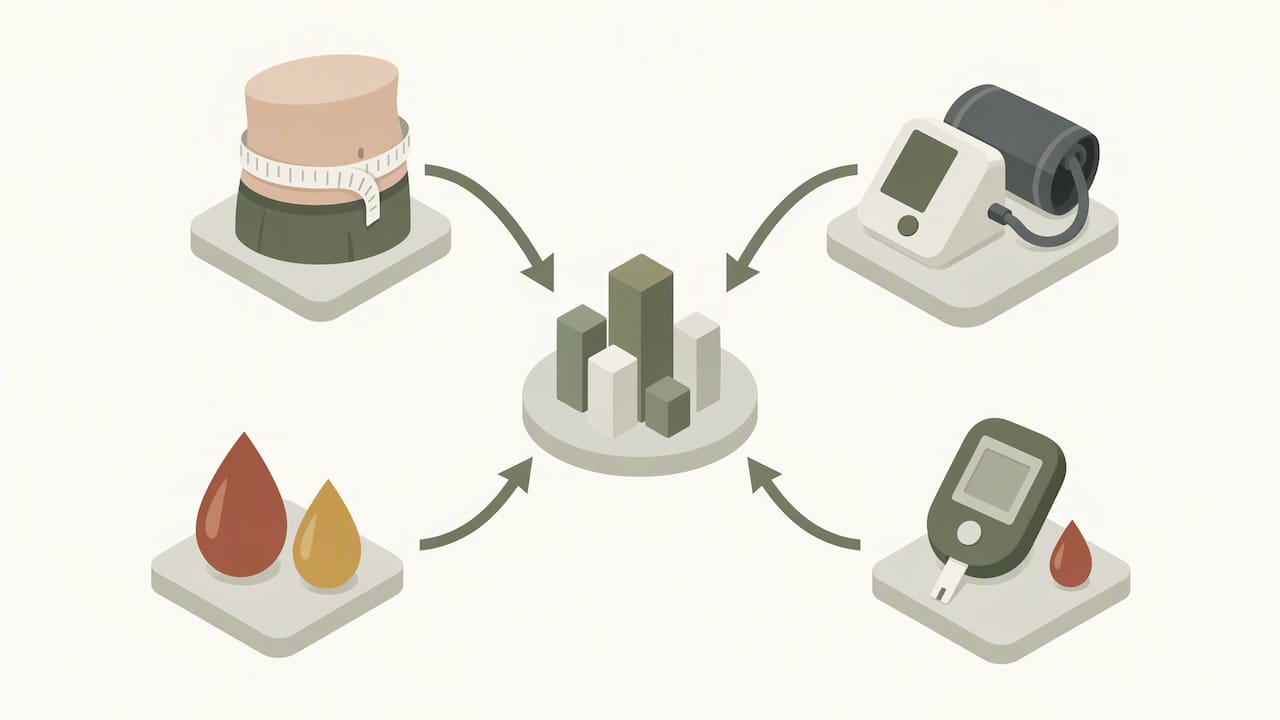
Five measures give the clearest picture of your metabolic health: blood glucose (including HbA1c), blood pressure, blood lipids (total cholesterol, HDL and triglycerides), waist circumference or waist-to-height ratio, and BMI. Taken together, they show your risk of metabolic syndrome and cardiovascular disease, and most of them can be improved with lifestyle change and clinical care. Below, we explain how each is measured, what the UK thresholds mean and what you can do about them.
TL;DR:
- An HbA1c of 42 mmol/mol (6%) signals diabetes risk, while 48 mmol/mol (6.5%) is a common diagnostic threshold; personal targets can differ.
- For home blood pressure, use a validated monitor, take two readings one minute apart morning and evening for seven days, then average them.
- Continuous glucose monitors and ketone tests mainly support diabetes management; they cannot diagnose metabolic problems, and one home result can mislead.
- Aim for at least 150 minutes of moderate activity weekly plus strength exercises; medication may also be needed, based on clinical risk and test results.
Table of Contents
- What do the five key metabolic health markers actually tell you?
- How are these markers measured in practice?
- What target levels and thresholds do clinicians use?
- How can you improve your metabolic health markers?
- Who should be tested, and when should you seek help?
- How do you get usable readings at home?
- What do inflammation markers like CRP add to a metabolic health check?
- Why do insulin resistance, fasting insulin and HOMA-IR matter?
- Can liver function tests like ALT flag metabolic problems?
- How do sleep and stress affect your metabolic health markers?
- Why does tracking your markers over time matter?
- Why tracking metabolic markers matters for men's health
- How we can help you understand and improve your numbers
- FAQ
- Sources
What do the five key metabolic health markers actually tell you?
Each marker captures a different part of the picture. None of them works well alone, which is why clinicians read them as a cluster rather than one headline number.
- Blood glucose and HbA1c: fasting glucose shows where your blood sugar sits at a single moment, while HbA1c reflects your average over the previous two to three months. Together they show whether your body is handling sugar well.
- Blood pressure: the top (systolic) number is the pressure when your heart beats, and the bottom (diastolic) is the pressure between beats. One high reading means little, but pressure that stays high strains your arteries, heart and kidneys over years.
- Blood lipids: total cholesterol, HDL (the "good" cholesterol) and triglycerides. The ratio of total cholesterol to HDL often says more about artery risk than the total on its own.
- Waist circumference and waist-to-height ratio: these track fat stored around your middle, which is the type most tied to heart and metabolic trouble.
- BMI: weight in kilograms divided by height in metres squared. It is quick and useful at population level, but it cannot tell muscle from fat.
On that last point, BMI can misclassify a muscular man as overweight, and the risk thresholds differ for some ethnic groups. Waist-to-height ratio is a sensitive measure of central adiposity and can be more informative than BMI for cardiometabolic complications. It is also why waist measurement and visceral fat are specifically linked to higher triglycerides, higher blood pressure and greater diabetes risk.
NICE notes that waist-to-height ratio can be a better guide to cardiometabolic risk than BMI alone, which is why we treat your waist as a marker in its own right.
Why clustering matters
Metabolic syndrome is the name for these problems showing up together. Nidirect describes it as three or more criteria, such as a raised waist circumference, high triglycerides with low HDL, high blood pressure and impaired glucose control. Having it is associated with a higher risk of cardiovascular disease and type 2 diabetes, but it can often be prevented or reversed by lifestyle change. That second part is the point of measuring in the first place.
How are these markers measured in practice?
You do not need specialist kit for most of this. A few blood tests and a tape measure cover most of the ground.
- Blood tests: a routine check usually includes a lipid profile and glucose, with HbA1c added where indicated. Your surgery will tell you if you need to fast beforehand, which is usually the case for a fasting glucose or a full triglyceride reading.
- HbA1c: this needs no fasting. For people already managing diabetes, HbA1c should be measured at least every 6–12 months, with an individual target agreed with a healthcare professional.
- Blood pressure: a clinic reading is a snapshot, and many men run higher in a surgery than at home. Home monitoring with a validated device gives a fuller picture.
- Waist and height: a tape measure and a wall. Divide your waist by your height, using the same units for both, to get your ratio.
- BMI: easy to calculate, but read it alongside your waist, never instead of it. Our healthy weight range calculator does the sums for you.
- CGM, flash and ketone testing: continuous glucose monitors, flash monitors and ketone checks belong mainly to diabetes management or acute risk. They are not a way to diagnose yourself, and a single self-test result can mislead.
Pro Tip: Book blood tests for a normal week. A heavy weekend, a bout of illness or a very poor night's sleep can nudge your numbers and make a one-off result look worse (or better) than your usual picture.
What target levels and thresholds do clinicians use?
Thresholds turn a number into a decision. They are guides, and your clinician may set a different target for you based on age, other conditions and your overall risk.
For most adults, the common blood pressure target is below 140/90 mmHg, with different targets for older people and some people with kidney disease.
- Blood pressure: 140/90 mmHg is the usual treatment threshold for most adults. Older adults may be given a higher target, and some people with other conditions a lower one, so your own target should be agreed with a healthcare professional.
- HbA1c: 42 mmol/mol (6%) is the threshold for being at risk of type 2 diabetes, and 48 mmol/mol (6.5%) is a common diagnostic and management threshold. People with frailty or other conditions often have individualised targets.
- Total cholesterol: in the NHS Health Check protocol, a total cholesterol under 4.99 mmol/l is considered within the normal range, with guidance on when to refer to a GP for higher values.
- Waist-to-height ratio: NICE describes 0.4–0.49 as generally healthy, 0.5–0.59 as increased risk and 0.6 or above as high risk. A useful rule of thumb is to keep your waist below half your height.
- Metabolic syndrome: three or more of the criteria listed earlier raises cardiometabolic risk.
A word on HDL and ratios. Higher HDL is better, and a lower total-to-HDL ratio generally means lower risk, so clinicians pay attention to the ratio as well as the total. Your own reading of that ratio belongs in a conversation with your GP or practice nurse, who will place it alongside your other numbers.
How can you improve your metabolic health markers?
The encouraging part is that most of these markers respond to the same handful of changes. You do not have to do everything at once, and you do not need a perfect plan.
- Eat in line with the Eatwell Guide: more fibre and whole foods, and less salt, added sugar and saturated fat. Steady changes can shift blood glucose, lipids and blood pressure.
- Move more: the UK Chief Medical Officers recommend at least 150 minutes of moderate-intensity activity a week plus strength-building exercises. Activity benefits metabolic health regardless of weight loss, so a brisk walk counts even when the scales do not move.
- Lose weight steadily: modest weight loss and structured behavioural programmes reduce the risk of progression to type 2 diabetes, and they are the core aim of the NHS Diabetes Prevention Programme. Our guide to an evidence-based starting plan is a practical place to begin, and if blood pressure is your concern, read weight and high blood pressure in men.
- Stop smoking and keep alcohol modest: both are tied to cardiometabolic risk, and both are among the few changes that help almost every marker at once.
- Know when medication fits: lipid-lowering, blood pressure and glucose-lowering drugs are clinician decisions, based on your risk score and test results. Lifestyle change and medication are not rivals. Many men need both, and our page on weight-management medication explains how the clinical pathway works.
Food is where many men feel stuck, and energy dips are a common trap. A partner resource on preventing sugar crashes gives practical nutrition tips that fit around a working day.
Pro Tip: Pick one marker to move first, usually the one your GP flagged. A single clear target is easier to keep hold of than a long list.
Who should be tested, and when should you seek help?
Most adults in the right age band can get a free check. The NHS Health Check covers BMI, waist, blood pressure, cholesterol and a diabetes risk assessment, gives you a 10-year cardiovascular risk score and offers advice on diet, activity, weight, smoking and alcohol.
Some groups need closer attention than the standard schedule:
- People living with overweight or obesity.
- People with a family history of heart disease or type 2 diabetes.
- People from ethnic backgrounds with higher risk at lower BMI.
- People taking antipsychotics or living with severe mental illness. Cardiometabolic monitoring matters here because comorbid cardiometabolic disease contributes substantially to mortality, and it should include BMI, waist, blood pressure, glucose and lipids.
Tools such as QRisk3 and diabetes risk scores help clinicians decide whether preventive treatment makes sense. Seek prompt review if you have a very high blood pressure reading, very high glucose, or ketones with symptoms of feeling unwell. If you are unsure whether a number is urgent, ring your surgery or NHS 111 rather than waiting.
How do you get usable readings at home?
Home readings only help if they are consistent. A tidy routine matters more than an expensive gadget.
- Use a validated blood pressure monitor. Sit quietly for a few minutes, with your back supported and your arm resting at heart height.
- Take two readings, one minute apart, morning and evening. Clinical home pathways recommend doing this for seven days and averaging the values for clinical decisions.
- Measure your waist at the midpoint between your lowest rib and the top of your pelvis, standing relaxed and breathing out normally.
- Work out your waist-to-height ratio by dividing your waist by your height.
- Write everything down and bring the averages to your appointment. Home monitoring gives a more accurate picture than a single clinic reading, and a written trend gives your clinician something to act on.
Pro Tip: Measure at the same times each day and discard the first reading of each pair. Nerves and a recent coffee both push the first number up.
Finger-prick glucose testing and continuous monitors have a role, mostly for people with diabetes. They are not a substitute for a laboratory test when a diagnosis is the question.
What do inflammation markers like CRP add to a metabolic health check?
C-reactive protein (CRP) is a protein your liver releases when there is inflammation in the body. It is not one of the five core markers, and it is not part of a standard NHS Health Check, but it appears in many wider assessments because long-term, low-grade inflammation often travels with excess abdominal fat, insulin resistance and raised cardiovascular risk.
A raised CRP is a clue, not a diagnosis. A cold, a dental infection, a hard training session or an injury can all push it up for a few days, which is why a single high result is usually repeated before anyone draws conclusions. A persistently raised level in someone with no obvious infection can prompt a conversation about weight, sleep, activity and the rest of the picture.
What you do with it matters more than the number. If your CRP is elevated and your waist, blood pressure or glucose are also creeping up, that pattern strengthens the case for acting on the basics: movement, food, sleep and weight. If you have had a CRP test through a private clinic, take the result to your GP rather than interpreting it alone, because reference ranges vary between laboratories and the right response depends on your whole profile.
Why do insulin resistance, fasting insulin and HOMA-IR matter?
Insulin resistance means your body needs more and more insulin to move glucose out of your blood. For years, your pancreas can keep up, so glucose and even HbA1c can look normal while insulin levels are already high. That is why the condition can sit unnoticed for a long time.
Two measures are often discussed. Fasting insulin is a blood test taken after an overnight fast. HOMA-IR is a calculation that combines fasting insulin and fasting glucose to estimate how resistant your body has become. Both are used more in research and private testing than in routine NHS practice, and there is no single UK threshold that clinicians apply to everyone, so a result needs interpreting by a professional who knows your history.
In everyday terms, you can often spot the signs without a special test. A larger waist, higher triglycerides alongside low HDL, rising blood pressure and a creeping HbA1c are the typical footprints. Those are exactly the criteria used for metabolic syndrome, which is why the core markers earn their place. If several of them are heading the wrong way, insulin resistance is a reasonable suspect, and the response is the same: reduce central fat, build muscle through strength work, and move regularly.
Can liver function tests like ALT flag metabolic problems?
Yes, increasingly so. Metabolic dysfunction-associated steatotic liver disease (MASLD) is the term for fat building up in the liver in people with metabolic risk factors. NICE guidance notes it is often without symptoms and can coexist with metabolic syndrome, which is why regular assessment matters for people with a higher BMI or diabetes risk factors.
Alanine aminotransferase (ALT) is one of the enzymes included in a standard liver function test. A mildly raised ALT in a man with a large waist, high triglycerides or raised glucose is a common reason for a GP to look further. It is not a perfect test. ALT can be normal even when the liver holds extra fat, and it can be raised by alcohol, certain medicines and other conditions, so it is a prompt to investigate rather than an answer.
The good news is that liver fat tends to respond well to the same changes that help the other markers: gradual weight loss, regular activity and less alcohol. If a blood test has flagged a raised ALT, ask your GP what comes next, and avoid cutting back on alcohol only on the day of the test, because your clinician needs the true picture.
How do sleep and stress affect your metabolic health markers?
Poor sleep and ongoing stress do not appear on a blood test as separate lines, but they show up in the numbers that do. Short or broken sleep can make hunger harder to manage, leave you less inclined to exercise and nudge blood pressure and glucose in the wrong direction. Long periods of stress often come with the habits that raise risk: late-night snacking, more alcohol, less movement and skipped meals.
Many men tell us their numbers drifted during a stretch of long hours or family worry, not because they suddenly ate differently on paper, but because routine fell apart. That is worth knowing before you blame willpower. A reading taken after a rough fortnight tells you about that fortnight as well as about you.
Small, realistic changes help. A regular bedtime, a dark and cool room, and a wind-down routine without screens can protect sleep. For stress, short breathing exercises and tiny, achievable goals are a gentler start than a total overhaul. Our mental health pages on breathing for stress and tiny goals when motivation is low are written for exactly this situation. If low mood or constant anxiety is part of the picture, talk to your GP, because looking after your head is part of looking after your numbers.
Why does tracking your markers over time matter?
A single result is a snapshot. A series of results is a story, and that is what lets you and your clinician make good decisions. A blood pressure average that climbs over time tells you something very different from one high reading in a stressful waiting room.
Tracking helps in three practical ways. It shows whether the changes you are making are working, even when the scales are stubborn. It helps a clinician decide whether to adjust your plan, add treatment or simply keep going. And it gives you something concrete to be proud of, such as a waist that has come down by a couple of centimetres or an HbA1c that has stepped back below a threshold.
Keep it simple. Record your home blood pressure averages, your waist and weight every few weeks, and your blood test results with their dates. Retest at the intervals your clinician suggests rather than constantly, because lipids and HbA1c take weeks to months to move. If you want to understand how checks like this are run and where they fall short, our Health MOT methodology and limitations page sets it out in plain English.
Why tracking metabolic markers matters for men's health
Too many men only find out their numbers when something has already gone wrong. We built SHIFT around a different idea: that your markers are information you can act on, not a verdict. We offer practical, evidence-led support and ongoing monitoring, so a result is the start of a plan rather than a worry to sit on. Bring your results to a clinician or a structured programme, and let the numbers guide the next step.
— Matt O’Brien
How we can help you understand and improve your numbers
If you want clinically governed support that carries on after the first appointment, we can help. Our team offers:
- Clinical assessment and verification, with regulated partners handling prescribing where it is appropriate.
- Structured lifestyle support, with progress checks and monitoring.
- Practical help on food, movement and personal goals through The Shift Programme.

Browse our Men's Health Knowledge Hub for plain-English guides, then bring your test results to an assessment and we will work out the next step with you.
FAQ
What is included in a metabolic blood panel?
A metabolic blood panel usually includes a lipid profile (total cholesterol, HDL and triglycerides) and glucose, with HbA1c added where it is indicated. The NHS Health Check combines these with BMI, waist and blood pressure to produce a 10-year cardiovascular risk score.
How do I fix my metabolic health?
Focus on the habits that move several markers at once: eating along Eatwell guidelines, at least 150 minutes of moderate activity a week plus strength work, and steady weight loss where it is needed. Stopping smoking and moderating alcohol also help. Medication is a clinician decision based on your test results.
What is a metabolic score?
There is no single official metabolic score in UK practice. Clinicians usually look at a group of markers together, and metabolic syndrome is diagnosed when three or more criteria are present. Be cautious of apps or tests that boil your health down to one number.
What happens if metabolic syndrome is left untreated?
Metabolic syndrome is associated with a higher risk of cardiovascular disease and type 2 diabetes. The encouraging point is that it can often be prevented or reversed by lifestyle change, so acting early makes a real difference.
Sources
Recommended
- BMI Explained for Men
- Men’s weight and waist statistics in England: HSE 2024
- Healthy Weight Range Calculator & Guide
- Belly Fat in Men: Why It Happens and What Helps
Related: SHIFT Health MOT | SHIFT Health.
Last updated .