
Missed a Wegovy Dose? UK NHS 5 Day Rule and When to Call Prescriber
If it's been within a few days since your missed Wegovy dose, inject it as soon as you remember and carry on with your usual weekly schedule from that day. If it's been longer, skip that dose entirely and wait for your next scheduled day. Never take two injections together to "catch up", and if you've missed multiple doses in a row, speak to your prescriber before injecting again.
TL;DR:
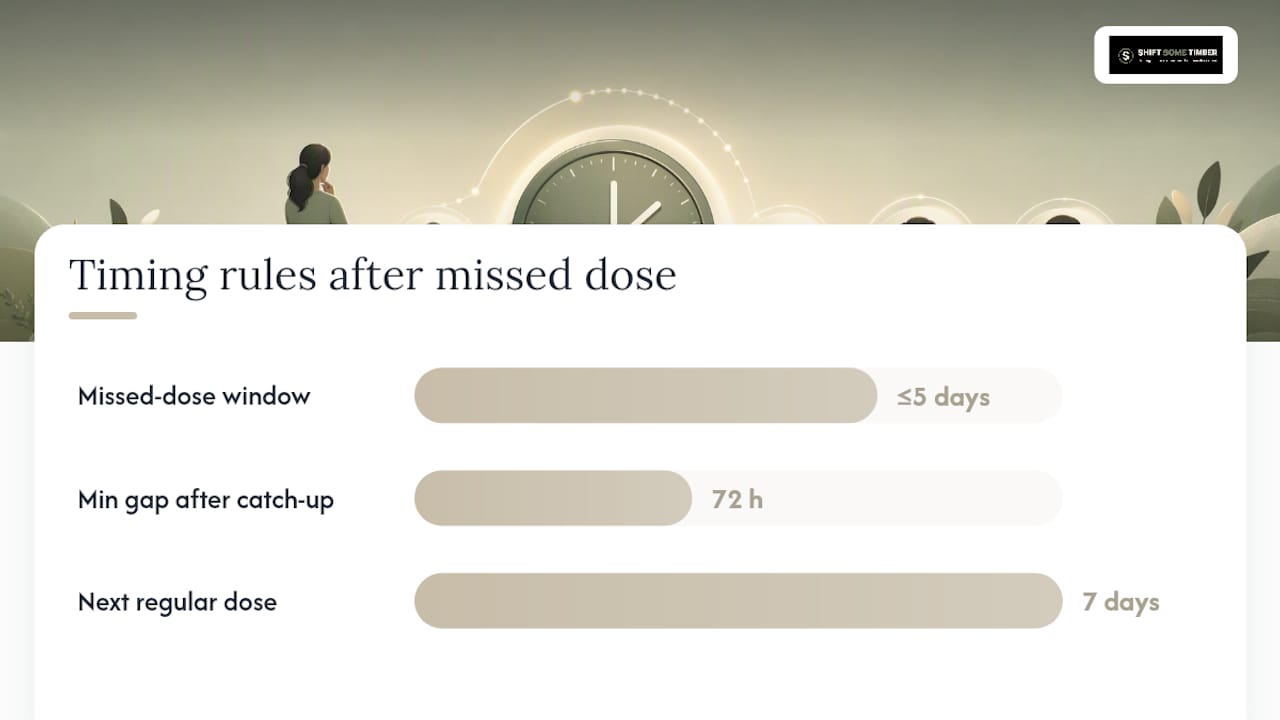
- If fewer than five days have passed since the missed Wegovy dose, you should inject it as soon as you remember and continue your weekly schedule, ensuring a minimum gap of 72 hours before the next injection.
- Past the five-day window, you must skip the missed dose entirely and wait until your next scheduled injection to maintain safety and avoid gastrointestinal side effects.
- Missing two or more doses requires contacting your prescriber to determine whether to restart at the previous dose, step down to a lower dose, or adjust your treatment plan based on your tolerance and history.
- You should move your injection day only if at least 72 hours separate the previous and new injection, and switching should be done gradually rather than forcing an immediate change.
- Proper recording, reminders, and consultation with a clinician are key to preventing missed doses and handling restart or adjustment safely.
Table of Contents
- [Missed a dose less than 5 days ago: what to do right now](#missed-a-dose-less-than-5-days-ago-what-to-do-right-now)
- [Missed a dose 5 days or more ago: why you skip it, not double up](#missed-a-dose-5-days-or-more-ago-why-you-skip-it-not-double-up)
- [Missed multiple doses in a row: when to call in your prescriber](#missed-multiple-doses-in-a-row-when-to-call-in-your-prescriber)
- [Changing your injection day without breaking the rules](#changing-your-injection-day-without-breaking-the-rules)
- [Side effects after a missed or restarted dose: what's normal, what's urgent](#side-effects-after-a-missed-or-restarted-dose-whats-normal-whats-urgent)
- [Simple systems that stop you missing the next one](#simple-systems-that-stop-you-missing-the-next-one)
- [How Shift Some Timber Ltd supports men who've missed a dose](#how-shift-some-timber-ltd-supports-men-whove-missed-a-dose)
- [A founder's note on missed doses](#a-founders-note-on-missed-doses)
- [Get clinician-led help with a missed dose or restart](#get-clinician-led-help-with-a-missed-dose-or-restart)
- [Sources](#sources)
- [FAQ](#faq)
Missed a dose less than 5 days ago: what to do right now
The 5 day rule comes straight from NHS guidance on semaglutide and the Wegovy SmPC on the electronic medicines compendium. If fewer than five days have passed since your missed jab, you're in the clear. Take it as soon as you remember, and your weekly rhythm carries on from that new date.
Here's the practical sequence to follow:
- Check the pen strength and expiry date. Wegovy comes in several strengths, including the higher 7.2 mg dose approved for adults with obesity. Make sure the pen you're picking up is the one you're actually prescribed.
- Prepare and inject the dose following your usual technique, into the usual site (abdomen, thigh or upper arm).
- Write down the date and the new weekday. This becomes your fresh weekly anchor point.
- Set your next reminder for 7 days later, on the new day of the week.
There's one boundary worth being strict about: don't inject again sooner than 72 hours after this catch-up dose, even if your instinct is to "get back on track" faster. That minimum separation is a recognised safety margin in UK prescribing guidance for GLP-1 agonists, and it exists separately from the 5 day missed dose window.
Pro Tip: Keep the pen carton until your next clinic contact. If you ever need to ring a pharmacist or your prescriber about a missed semaglutide dose, having the strength, batch number and expiry to hand saves a lot of back and forth.
Missed a dose 5 days or more ago: why you skip it, not double up
Once you're past the five day mark, the rule flips. You skip the missed injection completely and wait for your next dose on your normal weekday, exactly as NHS patient guidance sets out.
This isn't caution for caution's sake. Injecting an extra dose to "make up for lost time" stacks two full doses closer together than your body is used to, and that raises the chance of gastrointestinal side effects without giving you any real benefit. The Wegovy SmPC is explicit on this point: skip and resume, don't double and catch up.
What this looks like in practice:
- Note down the date you missed, even though you're not injecting.
- Keep your usual injection weekday exactly as it was, so your next dose lands on schedule.
- If you're at all unsure how many days have passed, or you've lost count, contact your prescriber before you inject anything.
- Never self-administer a second dose "just to be safe."
That last point matters more than it sounds. It's tempting to think more medicine equals faster progress, but semaglutide doesn't work that way. Skipping preserves the tolerability profile your body has adjusted to, which is exactly why the rule exists in official product information rather than as generic online advice.
Missed multiple doses in a row: when to call in your prescriber
Two or more missed weekly injections is a different situation entirely, and it's one where guessing isn't good enough. The Wegovy SmPC's re-initiation guidance advises contacting your prescriber, because restarting may call for a lower dose depending on how long you've been off treatment and how you tolerated it before.
Before you call, gather the details a clinician will actually ask for:
- How many doses you've missed, and the approximate dates.
- The last strength you were taking before the gap.
- How you tolerated that strength (nausea, no issues, needed a slower titration, and so on).
- Any current symptoms, even mild ones, since your last injection.
With that information, a clinician typically has three broad options: restart at your previous dose if the gap was short and tolerability was good, step down to a lower strength and re-titrate upward again, or adjust the overall plan if your circumstances have changed. This decision is individualised. SmPC guidance is deliberately non-prescriptive about a single "correct" restart dose, because the right answer depends on your history, not a generic table.
Pro Tip: Have the pen, the outer packet and your prescription details ready before the call. Reciting the strength and roughly how many weeks you've missed turns a ten-minute triage conversation into a two-minute one.
Changing your injection day without breaking the rules
Moving your weekly Wegovy day is straightforward as long as you respect one boundary: at least 72 hours must separate any two injections. This is a distinct rule from the 5 day missed dose window, and mixing the two up is a common source of confusion, according to prescribing guidance used across the NHS.
The method is simple: count forward or backward from your last injection and pick a transition date that keeps a gap of three days or more before your new fixed weekday takes over.
- Moving earlier in the week (say, from Friday to Tuesday): you'd need to delay slightly rather than compress, so the transition injection still sits at least 72 hours after the previous one.
- Moving later in the week (Tuesday to Friday): this is usually easier, since you're simply waiting a few extra days before settling into the new slot.
- Never inject twice within 72 hours to force an immediate switch, even if the new day feels more convenient.
Think of it as nudging your schedule sideways rather than jumping it. One transition injection, chosen carefully, and you're settled into the new weekday permanently.
Side effects after a missed or restarted dose: what's normal, what's urgent
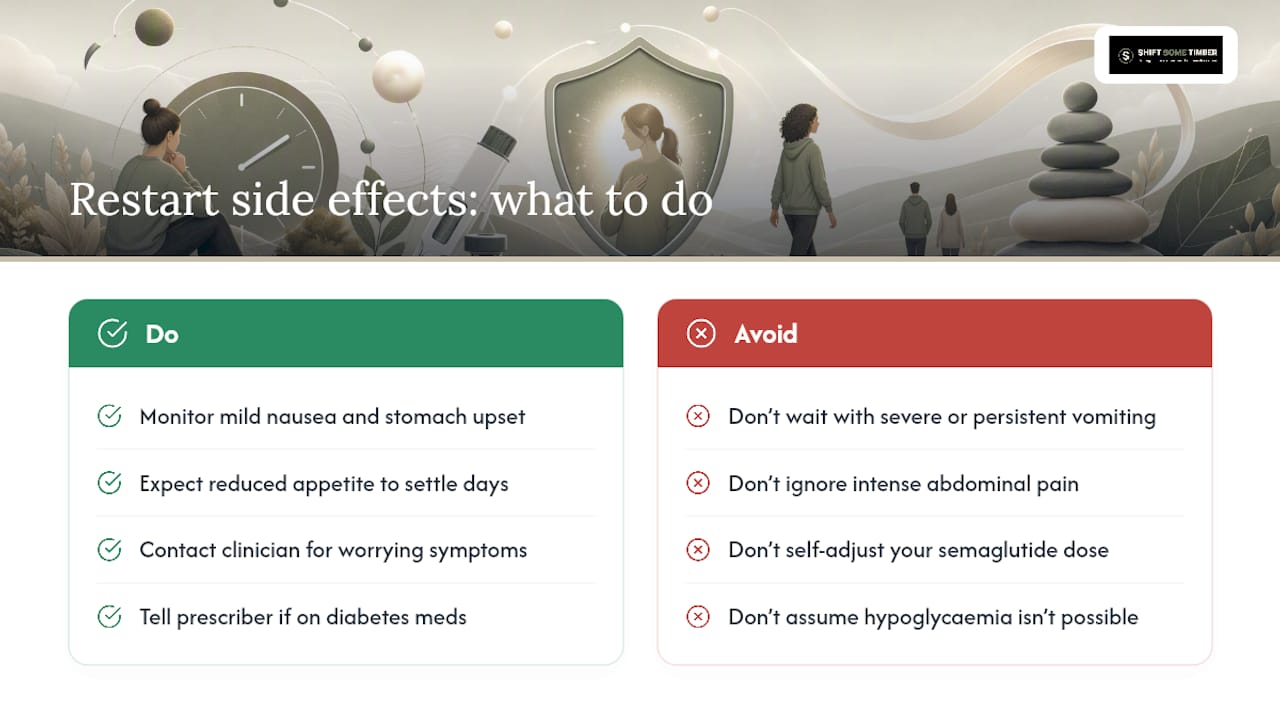
Restarting semaglutide, especially after a longer gap, can bring back mild gastrointestinal symptoms you may have already worked through once. Nausea, mild stomach upset and reduced appetite are common in the days after a dose increase or a restart, and they typically settle within a few days as GOV.UK's guidance on GLP-1 medicines notes.
When symptoms cross the line: Severe or persistent vomiting, an inability to keep fluids down, or intense abdominal pain that doesn't ease are not "normal side effects to push through." These can signal dehydration or, in rarer cases, pancreatitis, and both warrant urgent medical assessment rather than waiting it out.
If you're not diabetic, hypoglycaemia isn't a major concern on semaglutide alone, but if you're also taking other diabetes medication or you notice shakiness, sweating or confusion, contact your clinician promptly rather than adjusting your own dose.
The MHRA's safety update on GLP-1 medicines is blunt about this: these are prescription medicines with product-specific dosing, and the answer to worrying or persistent symptoms is clinical contact, never self-adjustment. If something feels genuinely wrong, treat it as a reason to call, not a reason to wait for your next dose to "see if it settles."
Simple systems that stop you missing the next one
Most missed doses come down to one thing: losing track of which day you're on. A few low-effort habits fix that almost entirely.
- Set a recurring weekly alarm on your phone, not a one-off reminder you'll dismiss and forget.
- Keep a simple pen log noting the date, weekday and strength for every injection, so you're never relying on memory.
- Pack spare pens when travelling, and adjust your reminder to local time so a time zone change doesn't quietly push your schedule.
- Ask someone you trust, or your pharmacy, to check in if self-injecting on schedule is genuinely difficult for you.
Recording the actual date rather than counting days from memory is the single biggest fix here. NHS guidance flags exactly this as the common practical error: people count from the day they remember missing a dose rather than the day it was actually due, which throws the whole 5 day calculation off.
Pro Tip: Keep your SmPC leaflet or the emc product information somewhere you can find it fast. When you're calling a pharmacist about a missed dose, being able to read the exact wording back to them speeds up the conversation no end.
How Shift Some Timber Ltd supports men who've missed a dose
When a missed dose turns into a genuine "what now" moment, structured clinical input beats guesswork. Shift Some Timber Ltd's approach centres on clinical assessment and prescriber-led decisions, so a restart after a gap in treatment is reviewed individually rather than assumed.
If you're reporting missed doses, come prepared with the same checklist any clinician would want: how many doses missed, approximate dates, last strength taken, and how you tolerated it. Clinical assessment and prescriber oversight shape how a safe restart is actually structured, whether that means resuming at your previous strength or stepping back down to re-titrate.
Structured support often covers food guidance, movement, and progress tracking, so a missed dose doesn't have to mean losing momentum on everything else.
A founder's note on missed doses
In conversations across men's health, the same small mistake comes up again and again: counting days from memory instead of checking a calendar. It sounds trivial, but it's the difference between confidently injecting on day four and needlessly worrying on day six when you were actually fine.
Most single missed doses are genuinely straightforward once you know the rule. Where it gets harder is repeated misses, or symptoms that don't settle. That's when a proper clinical conversation, not another Google search, is the right next move.
— Matt O’Brien
Get clinician-led help with a missed dose or restart
This service exists for exactly the moment this article is about: when a missed dose leaves you unsure whether to inject now, skip it, or wait for proper advice. Rather than guessing from a forum thread, you get a clinical assessment that looks at your actual history, with prescribing decisions made by regulated clinicians, not a generic algorithm.

If your situation involves more than one missed dose, or you're weighing up whether ongoing GLP-1 treatment still fits your life, it's worth comparing your options properly. A guide to GP care versus specialist weight-management support sets out when specialist input makes sense for medication management, including missed-dose reviews and monitored restarts. Every prescribing decision depends on individual clinical review, so the next step is simple: consult a clinician about your specific gap in treatment, rather than working from a general rule alone.
Sources
For the primary documents behind every rule in this guide, keep these bookmarked:
- NHS — Semaglutide patient guidance
- Wegovy 2.4 mg SmPC (emc)
- BLMK prescribing guideline — GLP‑1 agonists
Keep your pen carton and patient leaflet to hand whenever you contact a clinician about a missed dose. It saves confusion and speeds up the advice you get.
This article is general information, not a substitute for advice from a qualified doctor. Consult a qualified healthcare professional about your own circumstances before acting on anything here.
FAQ
What if I forgot my Wegovy dose entirely last week?
If more than five days have passed since the missed injection, skip it and take your next dose on your usual scheduled day, following NHS guidance. Don't inject two doses close together to compensate.
Can I take two Wegovy doses close together to catch up?
No. Taking two injections together or in close succession isn't recommended by the Wegovy SmPC, as it raises the risk of gastrointestinal side effects without any real clinical benefit. Skip the missed dose if you're past the 5 day window instead.
How do I safely change my Wegovy injection day?
Choose a transition injection that keeps at least 72 hours between it and your previous dose, as outlined in UK prescribing guidance. Once that transition is done, your new weekday becomes permanent.
What happens if I miss several weeks of Wegovy?
Contact your prescriber rather than restarting on your own, since missing multiple doses may mean a lower restart dose is needed depending on your prior tolerability and how long the gap has been. A clinical assessment process is built around exactly this kind of individualised restart decision.
When should a missed dose become an urgent concern?
Seek urgent medical attention if you develop severe or persistent vomiting, can't keep fluids down, or experience intense abdominal pain, as these can point to dehydration or pancreatitis. Mild, short-lived nausea after restarting is common and usually settles within a few days.