What to Eat on Mounjaro: A Practical Guide for UK Men
On Mounjaro, eat smaller, regular meals built around protein, fibre-rich vegetables and fruit, and wholegrain carbohydrates. Your appetite will drop, so each mouthful needs to count. There is no magic food list, and no food is banned. What matters is getting enough nutrition from less food, and keeping side effects like nausea, constipation and reflux under control.
This guide pulls together UK dietetic and NHS advice and turns it into things you can do on a Tuesday night after work. It is general information, not a personal plan. Your prescriber, GP or a registered dietitian knows your health history and should have the final say.
TL;DR
- Build meals around protein and fibre. When appetite is small, choose foods that are rich in nutrients rather than empty calories.
- Use the plate model: half vegetables, salad or fruit, a quarter protein, a quarter wholegrain carbohydrates.
- Eat smaller portions more often, and stop when you feel full. Leave big, late meals alone to cut down reflux.
- Side effects can often be eased with food changes. If they are severe or don't settle, speak to your prescriber.
- Food is only part of it. Movement, sleep and ongoing support are what keep the weight off.
Table of Contents
- Why what you eat matters more on Mounjaro
- The plate model: a simple way to build every meal
- Protein: the first thing to get right
- Fibre, fruit and veg: keep things moving
- Carbohydrates and fats: not the enemy
- Foods and habits worth going easy on
- Managing side effects with food
- Practical snacks that earn their place
- What a day might look like
- Eating well when life is busy
- Food is half the picture
- Our perspective
- Getting support that goes beyond a food list
- FAQ
- Sources
Why what you eat matters more on Mounjaro
Mounjaro (tirzepatide) turns the appetite dial down. That is the point of it. But eating less does not automatically mean eating well. If you only manage a few forkfuls at each meal and they are biscuits, you lose weight without getting the protein, fibre, vitamins and minerals your body needs.
The British Nutrition Foundation puts it simply: focus on quality calories, meaning foods rich in nutrients, fibre and protein, so you meet your needs despite a smaller appetite. NHS England guidance also says people using weight management injections should follow a balanced, reduced-calorie diet and stay physically active. The medicine helps. It does not replace the habits.
For men, there is an extra reason to care. When weight comes off quickly, some of it can be muscle. Eating enough protein, and lifting or moving regularly, is how you protect it. We cover that in more detail in our guide on preventing GLP-1 muscle loss.
The plate model: a simple way to build every meal
Forget counting every gram. Cambridge University Hospitals NHS Foundation Trust suggests a plate model for weight loss:
- Half the plate: vegetables, salad or fruit
- A quarter: protein, such as meat, fish, eggs, beans or lentils
- A quarter: wholegrain carbohydrates
That is it. If you eat a pub dinner, a work lunch or a family tea, you can run the same check by eye. Is there something green or colourful? Is there a palm-sized portion of protein? Is the carb wholegrain, or at least not the biggest thing on the plate?
When the whole plate feels like too much, the BDA Obesity Specialist Group advises eating the protein first. That way, if you fill up early, the most important part has already gone in.
Protein: the first thing to get right
Protein keeps you fuller, and it helps you hold on to muscle while you lose fat. A 2025 article in JAMA Internal Medicine, written for patients in the US, suggests starting each meal with 20 to 30g of protein while using GLP-1 medicines. Treat that as a sensible target to aim at rather than a UK rule, and ask your prescriber or dietitian what suits you.
Easy protein choices for a busy week:
- Eggs, boiled, scrambled or in an omelette
- Greek yoghurt or cottage cheese
- Chicken, turkey or lean beef
- White fish, tinned tuna or salmon
- Tofu, edamame, beans, lentils and chickpeas
- A protein shake on days when solid food is a struggle
A few examples of what 20 to 30g can look like in practice: a two-egg omelette with a pot of Greek yoghurt on the side, or a chicken breast with beans and vegetables. You don't need to weigh everything. Just make protein the first thing you think about, not an afterthought.
Fibre, fruit and veg: keep things moving
Slower digestion is part of how Mounjaro works, and constipation is a common result. Fibre and fluid are your first line of defence. Good fibre sources include:
- Vegetables: broccoli, peppers, spinach, carrots, tomatoes
- Fruit: berries, apples, pears, kiwis
- Oats, wholemeal bread, brown rice and wholewheat pasta
- Beans, lentils and chickpeas
- Nuts and seeds, in small amounts
CUH advises aiming for at least 2 litres of fluid a day and five portions of fruit and vegetables if you are constipated, including kiwis or prunes. Build fibre up gradually. A sudden jump from a low-fibre diet to a huge bowl of bran and beans can leave you bloated and uncomfortable.
Carbohydrates and fats: not the enemy
You will see plenty of online claims that bread, fruit or potatoes are "banned" on Mounjaro. They are not. The medicine does not work on a list of foods. The British Nutrition Foundation recommends including wholegrains, lean protein foods, fruit, vegetables and dairy or fortified alternatives. That is a normal healthy diet, just in smaller amounts.
Swapping refined carbohydrates for wholegrain ones makes sense, because you get more fibre per bite. Healthy fats, such as those in oily fish, nuts, olive oil and avocado, are fine in modest portions. They are filling and carry vitamins, but they are also calorie-dense, and rich or greasy food can sit heavily when your digestion is slower.

Can I eat sweetcorn on Mounjaro?
Yes. Ohio State's health team describes corn as a starchy vegetable you may want to cut back on in favour of lower-carbohydrate options such as berries, tomatoes, lettuce and broccoli, and says no foods are completely off-limits because of the medication. A few spoonfuls of sweetcorn in a salad or alongside a main meal is perfectly reasonable. It is about balance, not banning.
Foods and habits worth going easy on
Nothing is forbidden, but some things tend to cause trouble when your stomach empties slowly. Notice how your body reacts, and adjust.
- Large meals, especially late at night. CUH suggests avoiding large meals late in the evening to reduce the risk of reflux.
- Very fatty or fried food. Takeaway nights can feel rough if your stomach is sluggish. Try it in a small portion and see.
- Sugary snacks and drinks. They add calories without protein or fibre, and a small appetite is too valuable to spend on them.
- Fizzy drinks. Many people find bubbles add to bloating or burping. Still water, tea or sugar-free options are easier.
- Alcohol. It adds calories and can aggravate nausea and reflux in some people. Ask your prescriber how it fits with your treatment and your general health.
Treat these as "see how you go" rather than rules. The aim is to feel well enough to keep eating properly.
Managing side effects with food
Nausea, constipation, diarrhoea and reflux are the common complaints, especially after starting or stepping up a dose. Our guide to UK GLP-1 dosing steps explains why dose changes can bring them on. Here is what the NHS advice in the research suggests for food.
| Problem | What may help |
|---|---|
| Nausea | Small, frequent meals; plain dry foods such as toast or crackers; ginger or peppermint tea |
| Constipation | At least 2 litres of fluid a day; five portions of fruit and veg; kiwis or prunes |
| Diarrhoea | Small, frequent meals |
| Reflux | Smaller amounts, more often; sit upright to eat; don't lie down straight after meals |
| Sulphur burps | Cut back on high-sulphur foods such as eggs, dairy and cruciferous vegetables |
All of the above comes from Cambridge University Hospitals' tirzepatide dietary advice. One thing to note: sulphur burps are managed by easing off foods like eggs and dairy, which are also good protein sources. If that happens to you, balance it with other proteins such as fish, chicken or pulses rather than dropping protein altogether.
If you can't keep food or fluids down, have severe or persistent stomach pain, or symptoms that don't improve, contact your prescriber or GP promptly. Don't try to ride it out.
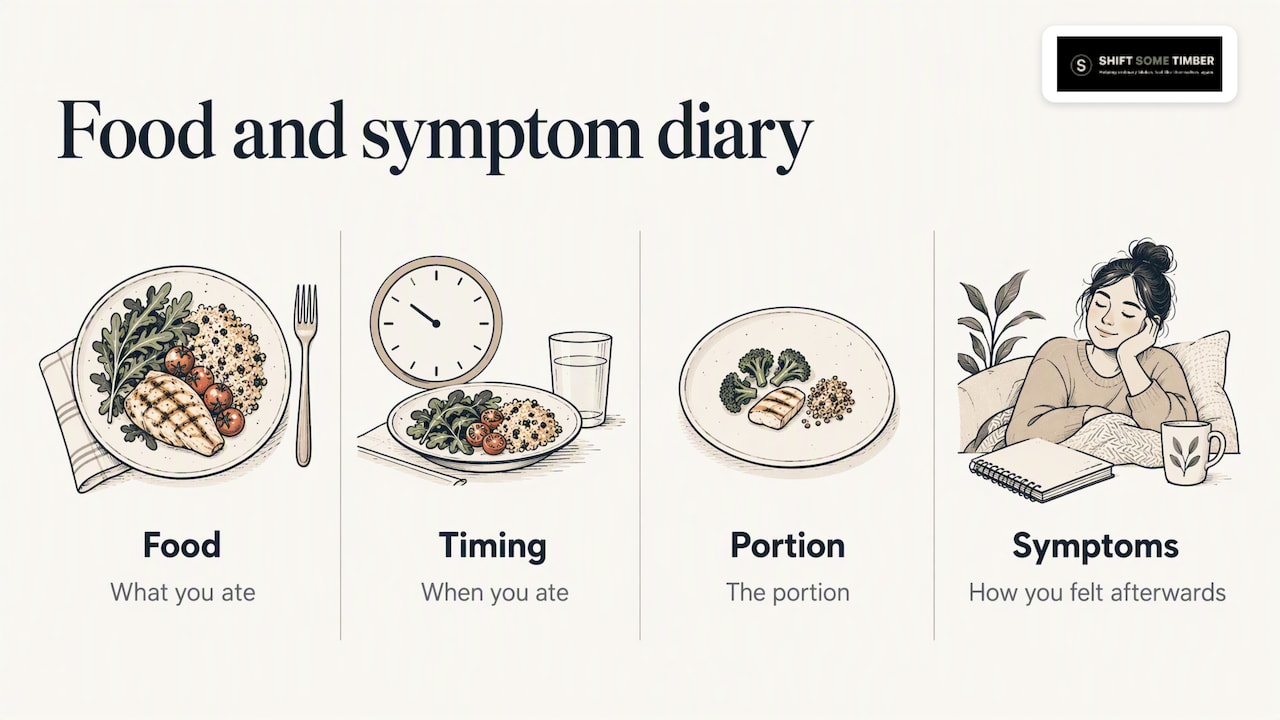
Keep a food and symptom diary
CUH also recommends a food and symptom diary to spot which foods make side effects worse. Two weeks of notes on your phone is enough: what you ate, when, the portion, and how you felt afterwards. Patterns show up quickly. Maybe it is the big Sunday roast, or the late-night snack, not the food itself.
Practical snacks that earn their place
Because you eat less at mealtimes, snacks can help you reach your protein and nutrient needs. CUH suggests:
- Greek yoghurt with fruit
- A handful of nuts
- Boiled eggs
- Skimmed milk
- Low-fat cheese or cottage cheese
- Chicken slices
- Edamame
- Carrot sticks with hummus
The same page notes that small, frequent meals may help with nausea or diarrhoea. If you work shifts, drive for a living or are on site all day, prep a few of these on Sunday so you aren't left with the garage meal deal.
What a day might look like
This is an example, not a prescription. Portions will be small, and they should fit your appetite and your prescriber's advice.
- Breakfast: scrambled eggs on one slice of wholemeal toast, with tomatoes
- Mid-morning: Greek yoghurt with berries
- Lunch: chicken and bean salad with a small portion of brown rice
- Afternoon: boiled egg or carrot sticks with hummus
- Tea: grilled salmon, broccoli and new potatoes, protein eaten first
On a rough day when nothing appeals, aim for the minimum: a protein shake or yoghurt, fluids, and something plain like toast. A bad day is not a failure.
Eating well when life is busy
Most men we speak to are not short on willpower. They are short on time, and the evening is when everything falls apart. A few ideas that stand up to real life:
- Cook once, eat twice. Make double of a chilli or chicken traybake and portion it up.
- Keep tinned fish, beans and frozen veg in. They are cheap, quick and last.
- Order the protein, not the chips. At a restaurant, ask for a starter-sized portion or a half portion.
- Serve smaller. A smaller plate for the family tea stops you leaving half of it and feeling bad about it.
- Sip fluids through the day. Thirst and low appetite make it easy to under-drink.
This is the kind of everyday practical help we built our Grub food tools around, and you can find more in our men's weight management support.
Food is half the picture
What you eat works best alongside movement. NHS England guidance pairs medication with regular physical activity, and strength work in particular helps protect muscle. Our guides on GLP-1 and exercise and muscle loss on GLP-1 treatment show how to start without needing a gym membership.
If your weight stalls, don't immediately cut your food further. Check protein, fluids, sleep and movement first. Our piece on a GLP-1 weight loss plateau walks through what four flat weeks can mean.
Our perspective
We started SHIFT because ordinary men were being handed a medicine and little else. The injection can quiet the food noise, but nobody tells you what to put on the plate once it has. That gap is where men get stuck: not eating enough, living on easy carbs, or losing strength along with the weight.
Our view is simple. Treat the medication as a helpful tool, not the whole plan. Build meals around protein and fibre, keep them small and regular, and be kind to yourself on the days it doesn't go to plan. Progress is more than the number on the scales: it is energy, how your clothes fit, and being able to keep up with the kids. We also think support should be there before, during and after treatment, including for men who started elsewhere or who have stopped medication.
— Matt O’Brien
Getting support that goes beyond a food list
If you are thinking about treatment, or already on it and want practical backup, SHIFT brings together general treatment information, food ideas, achievable movement and check-ins. SHIFT does not currently provide or book prescribing. You can read general information about weight-management medication and how clinical assessment and prescribing should work, or see how it all fits in our Mounjaro for men guide. Before any appointment, our weight-management review questions help you know what to ask.
FAQ
What should I be eating while taking Mounjaro?
Focus on nutrient-rich foods with fibre and protein: lean protein, wholegrains, fruit, vegetables and dairy or fortified alternatives. Use the plate model of half vegetables, a quarter protein and a quarter wholegrain carbohydrate. Eat smaller portions more often, and have the protein first if you fill up quickly.
Are there foods I must avoid on Mounjaro?
No food is strictly off-limits because of the medicine. Some things are worth limiting if they upset you, such as large late meals, greasy or fried food, sugary snacks and fizzy drinks. A food and symptom diary will show you what your own body tolerates.
How much protein do I need on Mounjaro?
There is no single number for everyone. A 2025 US article in JAMA Internal Medicine suggests starting each meal with 20 to 30g of protein to help maintain muscle. Ask your prescriber or a registered dietitian what is right for your size, health and activity level.
What can I eat if Mounjaro makes me feel sick?
Try small, frequent meals, plain dry foods such as toast or crackers, and ginger or peppermint tea. Avoid large meals and lying down straight after eating. If you can't keep fluids down, or the nausea doesn't settle, speak to your prescriber or GP.
Sources
- British Nutrition Foundation: Eating well while taking weight loss medications
- NHS England: Weight management injections
- Cambridge University Hospitals: Dietary advice for people using tirzepatide (Mounjaro)
- JAMA Internal Medicine: I Am Taking a GLP-1 Weight-Loss Medication, What Should I Know?
- Ohio State Health & Discovery: GLP-1 foods to limit
- BDA Obesity Specialist Group: Medications for obesity
Recommended
- Mounjaro for Men UK | Doses, NHS & Private Access
- Lifestyle Alone vs Mounjaro
- NICE List vs Private Prices: Mounjaro Cost in the UK
- Mounjaro vs Orlistat: effectiveness, side effects and daily use
Last updated .