
Over 40 Health Check for Men: What to Get and When
If you are a man over 40 in England, the first health check to get is the free NHS Health Check. It is offered every five years from age 40 to 74. It takes about 20 to 30 minutes and looks at your heart, circulation, kidney and diabetes risk. You do not need symptoms to have one, and you do not need to pay for anything. If you have not been invited, you can ask your GP practice.
This guide shows what the check involves, how often to repeat it, where blood tests fit in, and what to do with the numbers. It is written by the SHIFT Team for ordinary blokes who would rather know than guess. There is no pressure and no judgement here. One booked appointment is a good place to start.
TL;DR
- The NHS Health Check is free in England for people aged 40 to 74 without certain existing conditions, and is offered every five years.
- It includes height, weight, waist, blood pressure and a cholesterol test. A blood sugar test is added only if your risk looks higher.
- You get a 10-year cardiovascular risk score, so you leave with numbers you can act on.
- Private blood tests can add detail, but results need a clinician's interpretation. Your own GP or prescriber handles individual decisions.
- Free practical support with food, walking and check-ins is available from SHIFT's My Timber alongside any of this.
Table of Contents
- What the NHS Health Check covers
- How often should men have a health check?
- What if you already have a condition?
- What blood tests add
- Reading your results without panic
- A simple checklist before your appointment
- What to do with the results
- Where SHIFT fits
- Which check first?
- FAQ
- Sources
What the NHS Health Check covers
The NHS Health Check is a check-up of your cardiovascular health. According to the NHS, it is for adults in England aged 40 to 74 who do not already have conditions such as heart disease, diabetes, chronic kidney disease, high blood pressure, atrial fibrillation or stroke, and who are not on statins. Its aim is to flag a higher risk of heart disease, diabetes, kidney disease and stroke early.
A pharmacist, GP nurse or healthcare assistant usually carries it out. You can expect:
- Height, weight and waist measurements.
- A blood pressure reading.
- A cholesterol test.
- Possibly a blood sugar test.
- Questions about family history, smoking, alcohol and physical activity.
The NHS describes the result as a 10-year cardiovascular risk score, described as low, moderate or high. It is broken down into BMI, blood pressure, cholesterol, alcohol use, physical activity and diabetes risk. Think of it as a short list of things you can change, not a verdict.
Why blood sugar is not always tested
The NHS Health Check Best Practice Guidance (March 2016) says a plasma glucose test, with HbA1c recommended, is for people identified as at higher risk of diabetes during the check. Testing everyone is not considered clinically or cost effective. So if nobody offers you a sugar test, that does not mean the check was incomplete. If you are worried about diabetes, say so in the appointment. HbA1c is a blood test that reflects your average blood sugar over the previous two to three months.
How often should men have a health check?
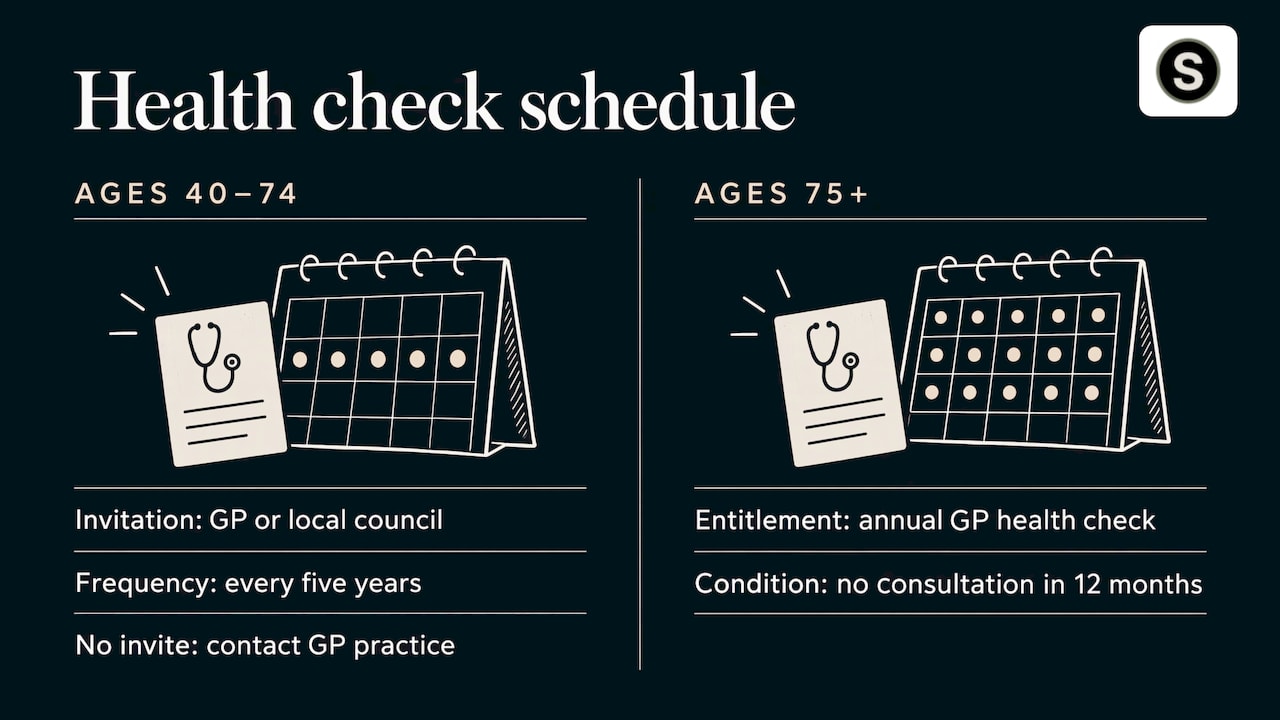
The NHS says eligible people aged 40 to 74 should be invited by their GP or local council every five years. If the invitation never arrives, contact your GP practice. If the practice does not offer checks, contact your local council.
The check became a statutory public health service in England in April 2013, and councils are legally required to offer it to everyone eligible once every five years, according to the Best Practice Guidance. In practice that means you are entitled to it, so asking is not a nuisance.
From 75, Age UK's GP services factsheet says you are entitled to an annual GP health check if you have not had a consultation in the previous 12 months.
A note for men in Scotland, Wales and Northern Ireland
The NHS page above describes the check for England. Health services are run separately in the other UK nations, so the name, age range and invitation process can differ. Ask your GP practice what is offered where you live.
What if you already have a condition?
If you already have high blood pressure, diabetes or take a statin, you are outside the NHS Health Check, because you are usually already being monitored. Your regular reviews with the practice do that job. Keep them booked. Those reviews are also the place to raise questions about any treatment, including weight-loss treatment, because your own prescriber handles individual treatment decisions.
What blood tests add
The NHS Health Check is not a full blood panel. It focuses on cholesterol and, where needed, blood sugar. Men often ask what else is worth knowing. Common blood tests include:
| Test | What it looks at |
|---|---|
| Cholesterol | Fats in the blood linked to heart and circulation risk |
| HbA1c | Average blood sugar over recent months |
| Kidney function | How well the kidneys filter the blood |
| Liver function | Markers of how the liver is coping |
| Full blood count | Red and white cells, which can point to anaemia or infection |
Our plain-English guides, What do common blood tests actually check? and Blood Tests for Men: What They Check and When, go through each marker in more detail.
Which tests suit you depends on your symptoms, family history and medicines. That is a conversation for your GP or prescriber. If you want to understand testosterone or fertility testing, our SHIFT Health education pages explain the basics so you can ask better questions.
Private blood tests: where they fit
GOV.UK's guidance on private screening points out that people aged 40 to 74 can have a free NHS Health Check covering heart disease, stroke and kidney disease risk. If you do choose a private test, treat it as one piece of information. Before you book, work out who will explain the results and what happens if something is flagged. A number with no follow-up tends to cause worry rather than action.
Reading your results without panic
The NHS blood tests page says a GP, nurse or specialist should discuss your results. If you hear nothing after a few weeks, contact the surgery. If you do not understand a result, ask to speak to a healthcare professional.
One NHS practice explains that reference ranges are standardised and may not apply to everyone. A result outside the range does not automatically mean something is wrong. Doctors read a result alongside your history and symptoms. The same practice notes that normal results do not guarantee everything is fine, which is why you should rely on a clinician's interpretation rather than a flag on a screen.
Our guide, Understanding blood-test results and follow-up, gives you questions to take to that conversation.
A simple checklist before your appointment
A little preparation makes a 20-minute check more useful.
- Check you are due. If you are 40 to 74 and have not had one in five years, ask your GP practice.
- Know your family history. Note heart disease, stroke, diabetes or high blood pressure in parents or siblings.
- Be honest about habits. Smoking, alcohol and activity feed the score. Nobody is marking you.
- Bring your medicines list. Include anything bought over the counter.
- Write down symptoms. Tiredness, snoring, low mood or changes in your waterworks are worth saying out loud, even if they seem small.
- Ask what happens next. Find out how you will receive results and when to chase them.
Blood pressure is the easiest number to follow between checks. Our Home Blood Pressure Reading Checklist for UK Men shows how to take a reliable reading at home.
What to do with the results
Your risk score points to the changes that matter most for you. Here is how the main numbers connect to everyday life.
- Weight and waist: Small, steady changes add up. Our Weight Loss for Men Over 40: A Realistic UK Guide is written for exactly this stage.
- Food: Practical, budget-friendly meals make it easier to keep going. Try the Chicken and vegetable rice bowl or browse the Healthy Eating Guide for Men.
- Movement: Walking is a sensible place to begin. See Exercise for Weight Loss: Walking, Strength and Mobility.
- Blood sugar: If your risk is higher, NHS support exists. Read Healthier You: understanding NHS diabetes-prevention support.
- Sleep and mood: Poor sleep and low mood often sit behind low energy. SHIFT Health and Life Back cover both in plain English.
If you keep track of body composition over time, for example after a scan, a guide such as understanding a DEXA scan T-score explains what the bone-density result means.
None of this replaces advice from your GP. If a result worries you, or you have chest pain, breathlessness or other symptoms, speak to your GP promptly or use NHS 111. In an emergency, call 999.
Where SHIFT fits
SHIFT is practical support, not a clinic. My Timber is free to use. It brings together daily and journey check-ins, progress tracking, SHIFT Grub for realistic food, SHIFT Fit for approachable walking and strength, Life Back for the things that matter beyond the scales, and Ask Timber for non-clinical support.
You can use it alongside your own clinic or prescriber, after treatment ends, or without treatment. No prescription transfer or purchase is needed. Clinical assessment, prescribing and dispensing through SHIFT are currently closed, so individual treatment questions go to your own prescriber.
A sensible first step after your check is to pick one number and one habit. For example, if your waist is the concern, choose a 20-minute walk after dinner. You can start from the SHIFT home page, or work through The Men's Health MOT Guide to organise what to ask next.
Which check first?
If you are unsure where to begin, Which health check should a man get first? sets out the order in plain terms. For most men aged 40 to 74 in England, the answer starts with the free NHS Health Check. Anything extra, such as screening in your 50s, builds on it. For example, Bowel screening in your 50s: what England's figures mean covers what comes next for many men.
FAQ
Is there a free health check for men over 40?
Yes, in England. The NHS Health Check is free for people aged 40 to 74 without certain existing conditions. It is offered every five years. If you have not been invited, contact your GP practice or local council.
How long does a health check take?
The NHS says the check takes about 20 to 30 minutes. It includes measurements, a blood pressure test and a cholesterol test, and you talk through your results afterwards.
How often should men have blood tests?
There is no single schedule for every man. The NHS Health Check, with its cholesterol test, comes round every five years for eligible people. If you have symptoms, a condition or take certain medicines, your GP or prescriber will tell you how often you need blood tests.
What should I do if a result is outside the normal range?
Do not assume the worst. A result outside the range does not necessarily mean something is wrong. Ask your GP, nurse or specialist to explain it, and chase the surgery if you have heard nothing after a few weeks.
Do I need a private test as well?
The free NHS check is the usual starting point for men aged 40 to 74. If you are considering private tests, talk to your GP about whether they would add anything for you.
Sources
- NHS Health Check, NHS
- NHS Health Check Best Practice Guidance, March 2016
- NHS GP services factsheet, Age UK
- Private screening for health conditions, GOV.UK
- Blood tests, NHS
- Understanding your blood test results, CHCP Practice
- What is a good DEXA scan T-score?
Recommended
- Blood Tests for Men: What They Check and When
- Which health check should a man get first?
- Low testosterone symptoms in men: what to check
- Keeping Track of Your Health Results Over Time: A UK Guide for Men
SHIFT provides general UK health information and practical support. Speak to your GP or your own prescriber about symptoms, test results or medicines. My Timber is free to use alongside your own clinic, after treatment ends or without treatment.
Last updated .