Weight Loss for Men Over 50: A Realistic UK Guide
You can lose weight after 50, and keep it off. It usually takes a steadier plan than the one that worked at 30: a modest calorie deficit, more protein, strength training twice a week, better sleep and less alcohol. For some men, prescription treatment is also an option. This guide covers each of those, with the UK guidance behind it.
TL;DR
- Aim for 0.5 to 1 kg (1 to 2 lbs) a week. The NHS says that is steady and sustainable.
- Add strength work on at least two days a week. It protects muscle, which matters more as you get older.
- Check your waist as well as the scales. A waist under half your height is a better target than a number on the bathroom scale.
- Medication is an adjunct, not a shortcut. NICE sets clear eligibility rules, and you still need food, movement and sleep sorted.
- Support that fits around work and family beats a strict plan you drop by week three.
Table of Contents
- Why it feels harder after 50
- Start with the right measurements
- Set a pace you can keep
- Eat for muscle, not just for a deficit
- Move in a way your body will thank you for
- Sleep and stress: the part nobody wants to hear
- When medication might be an option
- Our view: what we have seen matters most
- How SHIFT can help
- A first 30 days
- FAQ
- Sources
Why it feels harder after 50
It is not your imagination. Most men find the same routine delivers less than it used to. A few things are going on at once.
Muscle gradually declines. NHS dietitians point out that men over 40 may need to pay more attention to protein to offset the natural loss of muscle mass. Less muscle means you burn a little less each day, so eating the way you always have starts to add weight.
Life is busier and more sedentary. Desk jobs, long commutes, kids and ageing parents all squeeze out the time you once had for the gym or the five-a-side pitch.
Sleep and stress get worse. Poor sleep and ongoing stress are frequently overlooked drivers of weight gain. Tired men crave more food, and it tends to be the easy, calorie-heavy kind.
Drinking creeps up. A few pints on a Friday, a bottle of wine at the weekend, and the units add up without much notice.
None of this means you are stuck. It means the plan needs to be built for the body and the life you have now.
Start with the right measurements
BMI is a useful starting point, but it can mislead. A man who has carried muscle all his life can score as overweight when he is not carrying much excess fat. The reverse happens too: a normal BMI can hide a lot of fat around the middle.
For this reason NICE advises that, for adults with a BMI under 35, you also look at your waist-to-height ratio. The NHS overweight and obesity page sets out the thinking, and the target is a waist less than half your height.
Here is how to do it:
- Stand up straight and breathe out normally.
- Find the midpoint between the bottom of your ribs and the top of your hips, roughly at the belly button.
- Wrap a tape measure around, snug but not squeezing.
- Divide your waist by your height, using the same units.
So a man who is 178 cm tall should aim for a waist under 89 cm.
You may also see waist cut-offs for men. In health survey data, a waist under 94 cm is classed as low risk, 94 to 102 cm as high, and over 102 cm as very high. Write your number down. You will use it to track progress.
If your waist is in the high range, or you have symptoms such as breathlessness, chest pain, constant thirst or swollen ankles, book a GP appointment before starting anything demanding. The same goes if you have type 2 diabetes, heart disease or high blood pressure, or take regular medication.
Set a pace you can keep
Crash diets are the quickest way to lose muscle and regain everything. NICE guidance advises people to avoid extreme exercise or dietary behaviours, such as cutting out all carbohydrates in the long term, because they are hard to sustain.
The NHS recommendation is 0.5 to 1 kg a week. For a man who is 110 kg, that is a realistic 6 to 12 kg over three months. It will not feel dramatic week to week. It adds up.
Two habits help more than any trick:
- Weigh in once a week, same day, same time, and note your waist once a month.
- Track what you can see beyond the scales. Belt notches, stairs without puffing, energy at 3pm, how your trousers fit.
Eat for muscle, not just for a deficit
A modest calorie deficit is the base of fat loss. After 50, how you make that deficit matters more, because you want to lose fat and keep muscle.
Protein first
The general guide quoted by NHS dietitians is 0.75 g of protein per kilogram of body weight, with adjustments for age and activity. For a 90 kg man that is about 68 g a day as a starting point. If you are training and losing weight, ask a GP or registered dietitian whether you should aim higher, especially if you have kidney disease.
Spread it across two or three meals. Good everyday sources:
- Eggs on wholegrain toast
- Tinned fish such as sardines or salmon
- Chicken, lean mince or turkey
- Beans, lentils and chickpeas
- Greek yoghurt or cottage cheese
A simple plate
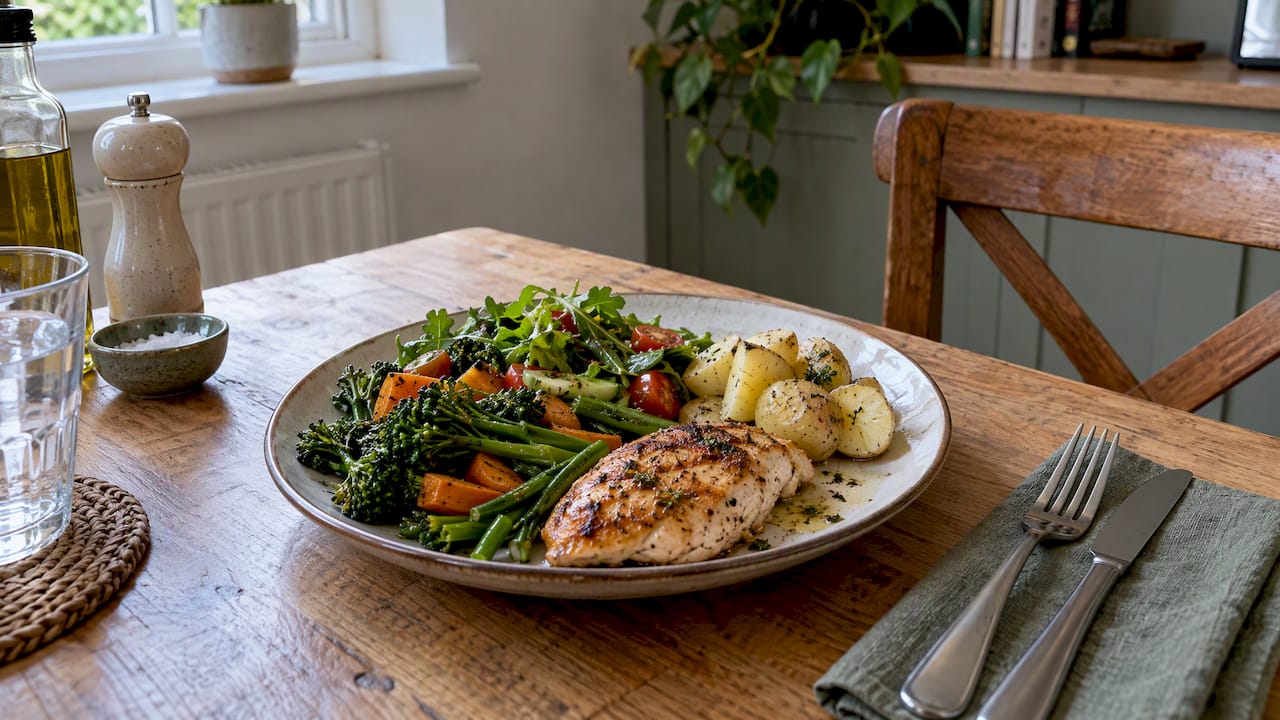
Half vegetables or salad, a palm-sized portion of protein, a fist of carbs (potatoes, rice, pasta, bread), and a thumb of fat. No weighing, no apps required to begin with.
If you want a structured plan, our 1,800 calorie UK men's diet guide sets out sample days using ordinary supermarket food. Many men over 50 will need a different calorie target depending on size and activity, so treat it as a template, not a rule.
Drinks count
Liquid calories are the easiest to cut. Swap sugary drinks for water, tea or coffee without sugar, and look hard at alcohol. The UK guidance is no more than 14 units a week, spread over at least three days. A 175 ml glass of 12% wine is 2.1 units, and a pint of 5% cider is 2.8 units, so five pints of that cider already puts you over the weekly limit.
Alcohol also adds calories, disrupts sleep and can worsen fatty liver disease. Use our alcohol unit calculator to see where you stand, and read how alcohol drives weight gain in men for practical swaps.
Move in a way your body will thank you for
The NHS target for adults is 150 minutes of moderate-intensity activity a week. Moderate means you can talk but not sing. Brisk walking, cycling and swimming all count.
The part many men skip is strength. The UK Chief Medical Officers' guidelines say adults should do activities that develop or maintain strength, and the government's announcement stresses that strength and balance work matters throughout life. Two days a week is the minimum.
A realistic week at home
This is a starting point for a man who has not trained for a while. It needs no gym.
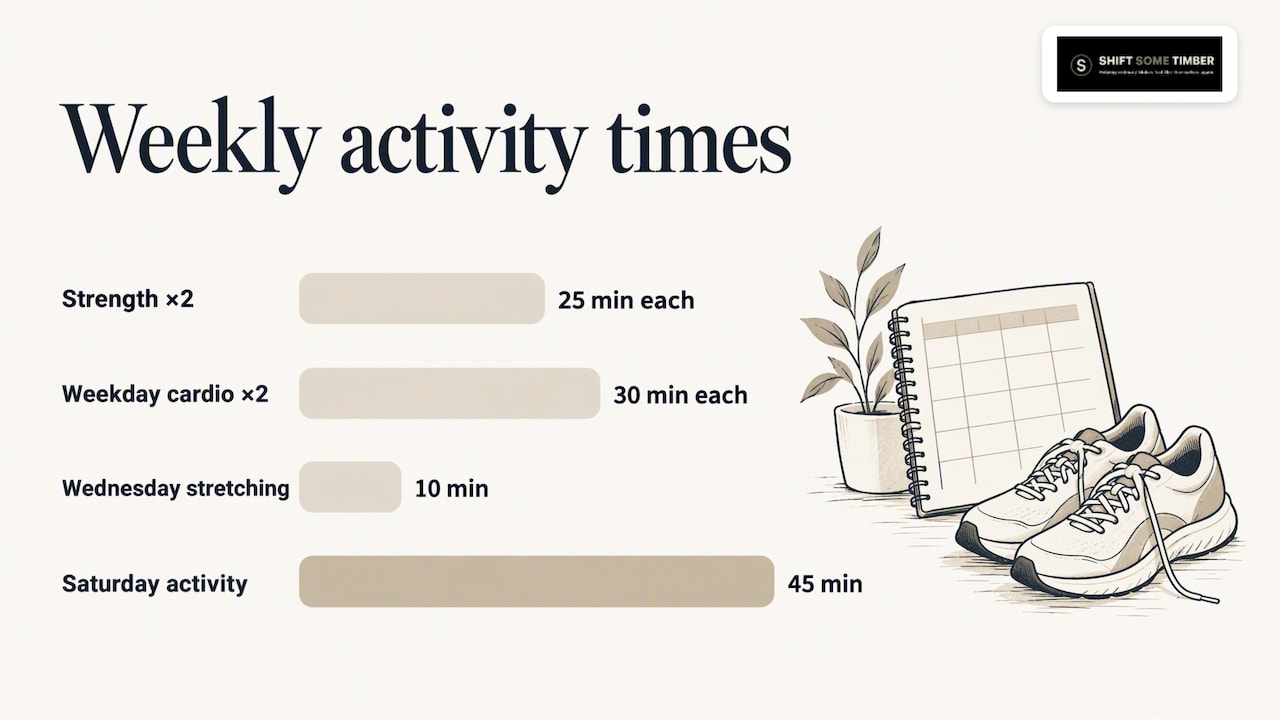
| Day | What | Time |
|---|---|---|
| Monday | Strength: sit-to-stands, wall or incline press-ups, glute bridges, rows with a backpack or bands | 25 minutes |
| Tuesday | Brisk walk | 30 minutes |
| Wednesday | Rest or gentle stretching | 10 minutes |
| Thursday | Strength: same moves, one more round or a bit more weight | 25 minutes |
| Friday | Brisk walk or bike ride | 30 minutes |
| Saturday | Something you enjoy: park walk, swim, football with the kids | 45 minutes |
| Sunday | Rest |
That comes to roughly 135 minutes of aerobic activity plus two strength sessions. Add an extra 15 minutes of walking and you have hit the 150.
Start lighter than your ego wants. Two sets of eight to ten reps, with a couple left in the tank, is plenty for the first fortnight. If a joint hurts sharply, stop and get it checked. For more structure, see our realistic weekly fat loss plan for men.
Sit less
Any movement counts. Stand up on calls, walk after dinner, take the stairs. It will not replace training, but it adds calories burned across the day without needing any willpower.
Sleep and stress: the part nobody wants to hear
If you sleep five hours and live on coffee, the best diet in the world struggles. NHS advice is simple: keep fixed bedtimes, avoid screens for an hour before sleep, and keep the bedroom dark and cool. If you cannot sleep, get up and do something relaxing rather than lying there frustrated, so the bed does not become linked with worry.
Some men find that a warm wind-down helps. If you are curious, there is a useful breakdown of how sauna use may affect sleep. Whatever you try, keep the routine regular.
If you snore heavily, wake unrefreshed or your partner has noticed you stop breathing at night, mention it to your GP. Sleep apnoea is common in men carrying extra weight and is treatable.
For wider energy, sleep and wellbeing advice, our men's health section is a good next stop.
When medication might be an option
For some men, lifestyle changes alone are not enough. Prescription weight management medicines such as semaglutide and tirzepatide are available in the UK, with rules about who qualifies.
According to NICE guidance:
- They are for adults with a BMI of 35 or more and at least one weight-related health condition, or a BMI of 30 to 34.9 if eligible for specialist services.
- Thresholds are lowered by 2.5 for some ethnic backgrounds.
- Treatment should be stopped if weight loss is under 5% of starting body weight after six months.
NICE also says medicines are used alongside a reduced-calorie diet and more activity. For semaglutide, the NICE recommendation includes a maximum of two years of use.
Two points matter especially for men over 50.
Protect your muscle. The research shows you lose both fat and muscle on these drugs, so strength training at least twice a week matters even more. That is the same CMO advice as above.
Plan the exit. Stopping should not be cold turkey. NHS guidance from Greater Manchester suggests you and your prescriber use shared decision-making and reduce gradually, often by 2.5 mg every four weeks for tirzepatide. Habits built beforehand are what stop the weight coming back. Healthcare professionals recommend pre-rehearsed "if-then" plans: if I am at a work do, then I eat before I go and stick to two drinks.
If you are weighing options, our treatment comparison for UK men sets them side by side. If you want to know what results look like over time, read about semaglutide results timelines and review points. Whether treatment suits you is a decision for a regulated prescriber who knows your medical history, particularly if you take other medicines, have diabetes or have a history of pancreatitis or gallbladder problems.
Our view: what we have seen matters most
We built SHIFT because most weight loss advice for men is either shouty or patronising. Neither helps a bloke of 52 with a full-time job, a mortgage and a dodgy knee.
What we believe, and what shapes every part of the programme:
- Small and boring wins. The men who keep weight off are rarely the ones who went hardest in week one. They are the ones who found a routine that survived a bad week.
- Food noise is real. Constant thoughts about food are not a character flaw. Planning meals, eating protein and sleeping properly all help, and so can treatment where it is appropriate.
- The scales are only one measure. Energy, confidence, how you feel playing with the grandkids or climbing a hill: these are the results most men tell us they care about.
- Support should not stop at the prescription. Whether you are thinking about treatment, on it, coming off it, or want no medication at all, you still need the daily stuff sorted: what to eat, how to move, and what you are doing it all for.
- No judgement. If you have tried and failed before, that is information, not a verdict.
— Matt O’Brien
How SHIFT can help
If you would like a plan that fits around work and family, our weight management service for men brings together treatment information and pathways with The Programme: Grub for practical food ideas, Fit for achievable movement, Life Back for personal goals, and My Timber for check-ins and progress tracking. Clinical assessment, prescribing and dispensing are handled by appropriately regulated partners, and you are welcome before, during or after treatment, including if you started elsewhere.
Not sure whether to go structured or DIY? Our comparison of a structured programme against DIY dieting lays out the trade-offs honestly. And if you want to compare routes through the NHS and private care, see GP versus specialist weight management.
A first 30 days
Do not try everything at once. Pick one change a week.
- Week 1: Measure your waist and weight. Book a GP check if you have any health conditions. Swap sugary drinks for water or tea.
- Week 2: Add a protein source to breakfast. Start two 10 to 15 minute walks a day.
- Week 3: Do your first two strength sessions. Set a fixed bedtime and keep screens out of the last hour.
- Week 4: Check your units for the month. Cut one drinking occasion. Re-measure your waist and note how your energy has changed.
If weight has barely moved by the end of the month but you are sleeping better, walking more and eating more protein, the foundations are in place. Give it another month before changing anything.
FAQ
How can a man in his fifties lose weight fast?
Fast is the wrong target. The NHS recommends 0.5 to 1 kg a week, and quicker loss tends to take muscle with it and come back. The quickest route that lasts is a small calorie deficit, plenty of protein, two strength sessions a week and enough sleep.
How can a 50-year-old man lose belly fat?
You cannot choose where fat comes off, but belly fat does respond to the same basics: a calorie deficit, regular brisk activity, strength training and less alcohol. Track your waist as well as your weight. Aim for a waist under half your height.
Is it harder to lose weight as you get older?
Usually, yes. Muscle mass declines with age, sleep often gets worse and routines become more sedentary. It is still very achievable, and strength training and protein help you work with these changes rather than against them.
Can I get fit again if I have not exercised for years?
Yes. Start with walking and simple bodyweight strength moves at home, and build slowly. If you have heart problems, high blood pressure, diabetes or joint issues, speak to your GP first. Our weekly workout plan shows one way to progress.
Sources
- Overweight and obesity in adults, NHS
- Medicines and surgery, Overweight and obesity management, NICE NG246
- Overweight and obesity management, NICE NG246 (PDF)
- Semaglutide for managing overweight and obesity, NICE TA875
- UK Chief Medical Officers' physical activity guidelines, GOV.UK
- New UK CMO activity guidelines show every movement counts, GOV.UK
- Overweight and obesity, NHS England Digital
- Protein packing, Mersey Care NHS
- MASLD patient booklet, King's College Hospital NHS
Recommended
- Lose Weight With a Men’s Diet: UK 1,800 Calorie Plans That Last
- Men's Fat Loss Workouts: A Realistic Weekly Plan
- Healthy Meals on a Budget: A UK Guide for Men
- Weight Loss for Men Over 40: A Realistic UK Guide
Last updated .